All the Ears of Clay
Page 161 of 279
Chapters
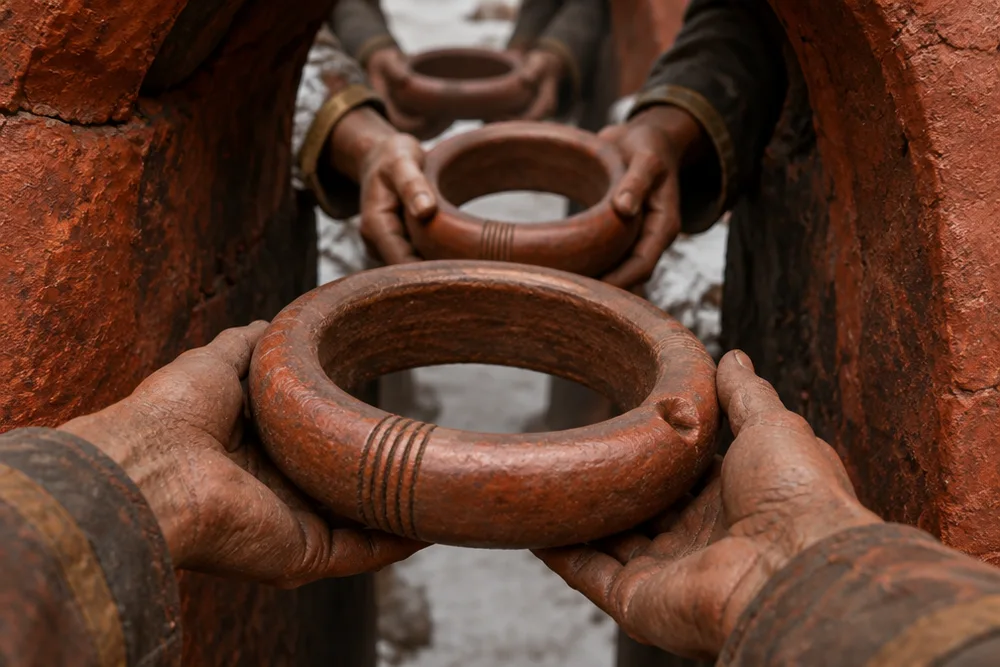
Ressa let the exchange stand. She felt the old urge to take the slate and make the crew move faster, as if speed could restore the days they had spent finding a route. Instead she carried the next ring herself, supporting its curve with both hands.
At the chalk door, Holl had written the fuel count in two columns: briquettes issued and briquettes remaining. The second column was a single hard zero. The town had burned its reserve, and the old drift that had been carried forward on the records ended in blank salt. These were the last briquettes. No one could replace a cracked ring with another firing.
When the stacks were corrected, Miri checked the bend sequence again. She walked the chalk line on the floor, tracing the route with one finger, then looked up at Ressa. “This matches the lane.”
“It does.”
“Then we load.”
The kiln’s red bowl stood open to the gusts. The loading throat faced the lee, but the wind found its edges and worried at the loose soot around the opening. The crew began moving the corrected rings inside. Ressa watched every piece settle into its place, not because she distrusted the hands, but because trust could not do the work of a second set of eyes.
When the final ring disappeared into the darkness, Miri stayed crouched at the threshold. “No roof tiles at all,” she said.
“No roof tiles,” Ressa agreed.
The empty rack waited beyond the kiln, its pegs bare. Nobody had taken it down. For now, it stood like a shape the town had not yet decided how to remember.
Ressa took the last briquettes from the fuel bin in counted pairs. Holl watched each one cross the threshold, adding a mark to his board. There was no ceremonial handful, no extra lump for luck. Their fuel had become a number that could not be softened by anyone’s hope.
The kiln mouth glowed when the first briquettes caught. Ressa fed them in and closed the iron damper to the notch they had agreed on. Smoke crawled along the bowl’s inner curve. The pipes would need a steady rise of heat, then a long soak; the thick collars and return bends were less forgiving than roof tile. She had explained this to the crew before they voted. She had not explained how much of the result was beyond her hands.
“First mark,” Holl called.
Miri recorded the time on the board beside the fuel count. A neighbor took her place at the bellows while she wrote, and another checked the screens they had set against the wind. Every task had a name beside it. The roster was narrow, but it was theirs.