A Place for the Knocking
Page 260 of 286
Chapters
The chairwoman’s face went pale. “Should we clear the room?”
“No,” Tess said. “Don’t make a rush of it.”
Some listeners turned toward the singers. One man began to hum along. Another joined him, uncertainly. Tess felt the old machinery assembling: one voice offering the phrase, another giving it back, a crowd turning habit into direction. The singers stood near the arcade entrance, several of them carrying small paper flags from past processions. Their mouths moved with solemn concentration. They were not cruel. They had come because they were frightened of losing a thing they understood, even if what they understood had been hurting people.
Tess stepped away from the chairwoman and stood where the band could see her. She lifted one hand, palm outward. Not a signal to begin. A signal to wait.
Harl held his trumpet at his side. The drummer kept both sticks across his knees. Nobody played.
The singing reached the phrase where, in other years, the band would have come in. The pause opened, expectant. Tess heard it fill with all the absent things: the dead sister behind an open cupboard; a mother in a pantry who wanted sleep; the boy who had waited so long he could no longer tell whose wish he was keeping. She did not know the names of most of them. She knew enough not to answer.
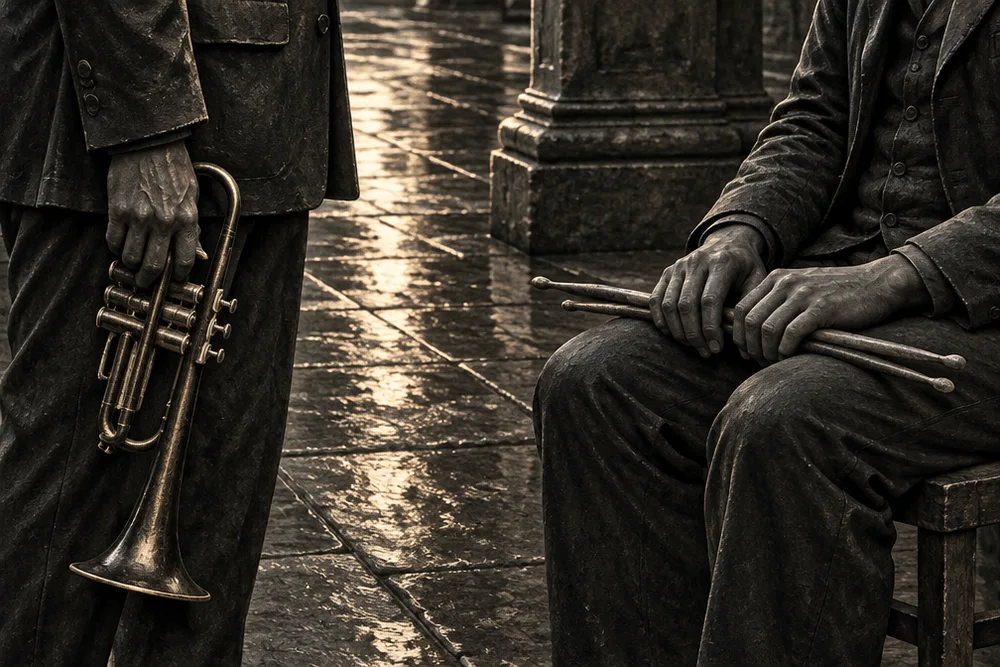
The singers waited. The crowd waited with them.
Then, from somewhere in the arcade, a child sneezed. A small, ridiculous sound. A few people laughed, not at the singers but at the sudden ordinary interruption. The waiting broke. The woman at the front lowered her flag.
Tess didn’t tell them what the moment meant. She only turned to the band and nodded toward their music. Harl raised his trumpet, and the players began a plain, lively tune with no place in it for anyone to follow.
The woman with the flag stayed through the next piece. When it ended, she folded the paper in half and put it into her coat pocket. She did not come to speak with Tess. Tess let her go without trying to turn a small change into a pledge.
The band played until the light began to flatten beyond the arcade mouth. The crowd thinned without being directed. Some of the listeners lingered to stack chairs. The family from the previous day helped carry the stands to the wall. The boy asked Harl if the trumpet was heavy, and Harl, who usually answered children with a grunt, let him lift the instrument’s case by one handle.