A Place for the Knocking
Page 231 of 286
Chapters
“Not yet,” Asa said. They were fastening a button at Len’s collar. “Your mother’s still downstairs.”
Tess put her horn down. “We’ll wait.”
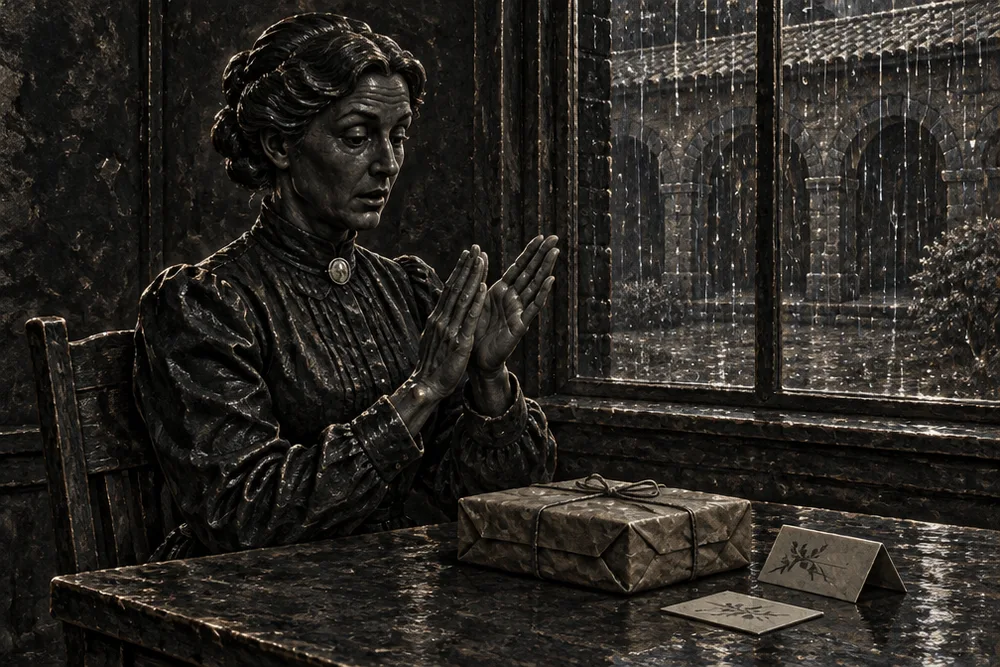
Len’s mother arrived a few minutes later carrying a parcel wrapped in brown paper. She was a small, straight-backed woman with a silver pin at her throat. When Asa introduced Tess, the woman glanced at the horn and then at the players. “I asked for the harbor tune,” she said.
“We don’t play it,” Tess replied. “It helped keep the city’s doors open. The dead were answering it. We stopped.”
The woman’s eyes narrowed. For a moment, Tess thought she might ask them to leave. Instead she looked past Tess to the windows, where rain ran in threads down the glass. “My sister was not in the harbor,” she said.
“No,” Tess said. “But the tune was carrying her voice to people who couldn’t let her rest.”
The woman held the paper parcel against her middle. “Then play what the young ones asked for.” She walked to the front table and set the parcel beside the place cards. Tess watched her sit, hands folded, before lifting her horn again.
They began with the crooked melody from the tin whistle. The first phrase stumbled on purpose; the second gathered speed, and the room followed it. A few guests laughed when Hask’s drum found the offbeat. Len and Asa danced without trying to make the steps elegant. Their shoes squeaked on the boards, and the guests clapped in uneven time.
Tess watched faces rather than doors. The old woman sat by the front table with the brown-paper parcel beside her. When the melody ended, she applauded once, then looked startled at herself and joined the others. No shadow gathered in the vestibule. No voice emerged from the closed pantry in the kitchen. The hall remained a hall, full of living people who had chosen to come inside.
The band played a slow tune for the elders and a reel for the children, who formed a line that bent around the tables and almost collided with the cake. Tess stopped them before they knocked over a stack of cups. The children groaned, then asked for another turn. She gave them one after the cake had been moved to safety.
During the meal, Venn stood near the courtyard windows, polishing his cornet with a cloth. “It’s strange,” he said. “We used to think the important part was getting the sound far enough.”