A Place for the Knocking
Page 121 of 286
Chapters
“You’re right,” Tess said. “That’s why I’m asking you not to make it for everyone else.”
His eyes went to the silent band. “They’re paid to play.”
“They are paid to play music. They are not paid to keep the dead awake.”
The sentence stopped the conversation more effectively than her earlier orders. The gray-haired cornetist looked up. The drummer’s hands relaxed. The officials shifted their weight, uncertain what to do with a duty that had been named plainly enough to be refused.
Below, the crowd sang the opening phrase again. This time it came from the harbor road, louder than before. An answer rose behind it, many voices joining in a rhythm too steady to belong to one throat.
Tess stood at the top of the arcade stairs. “We can’t control what people sing,” she said. “We can still choose not to lead them.”
The crowd’s tune climbed toward them, though the procession had been meant to descend. Tess felt the reversal in her feet: the old cadence was drawing the voices uphill, toward the market and the homes above it. The band had not caused that movement by itself. It had taught the city how to move together, and now the city could carry the rhythm without instruments.
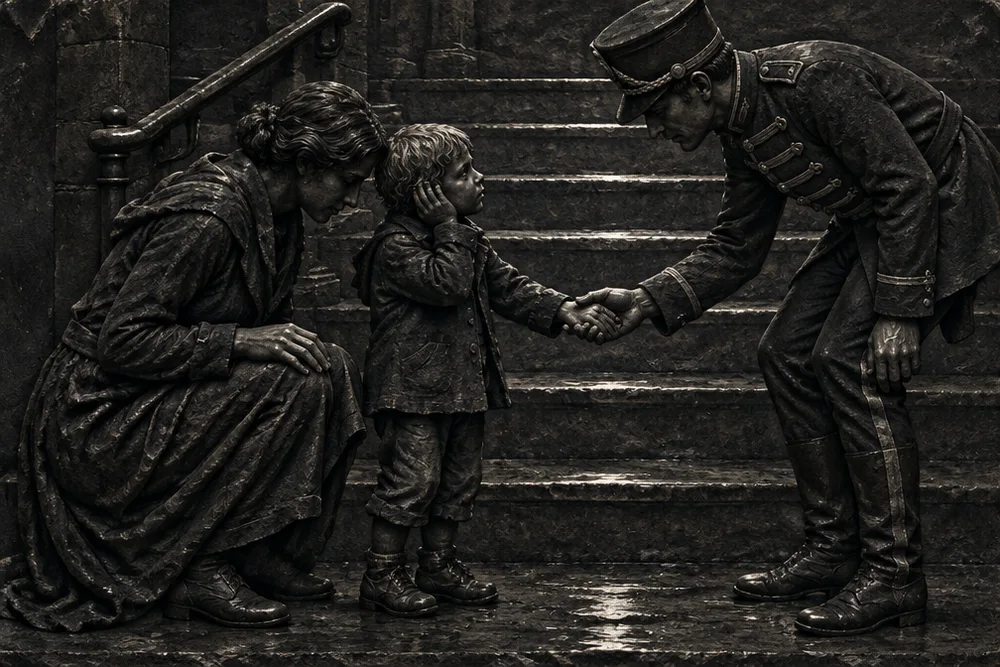
A child ran into the arcade, followed by a woman calling his name. He had both hands over his ears. The woman caught him and crouched, speaking into his hair. Tess watched the child’s shoulders rise and fall. He was living, frightened, and close enough to touch. She could do something for him. She could not reach through every open door at once.
“We should move them away from the route,” Neri said. “The children, the people who are answering. Get them somewhere they can’t hear it as clearly.”
“The upper arcade,” Tess said. “Keep the stairs clear.”
The band rose at once. They had a task they understood: clear a passage, help a child, carry an instrument without playing it. One player offered the woman his water. The drummer took the child’s hand only when the woman nodded. The small, ordinary motions settled the group more surely than any command.
As they moved, the melody surged from below. The crowd was singing the second phrase now, the one Tess had always taught as the cue to begin walking. The rhythm moved through the city’s stone like a procession of footsteps. At the end of each phrase, the dead answered.