A Fair Share of Winter
Page 223 of 286
Chapters
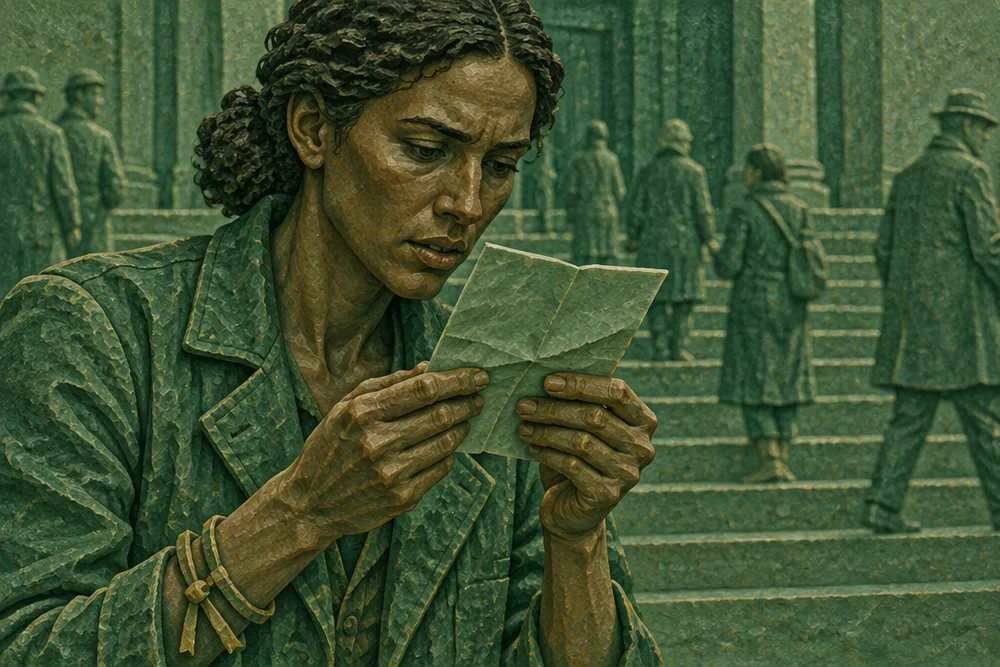
A market boy hurried over with a folded sheet. He had been sent to fetch Xanthe from the stair, but the vote had begun and he had caught up with her here. “Your mother says I should give you this now.”
The paper held Ibb’s handwriting: uneven, compact, and laid across the page with the blunt confidence of someone who expected the reader to keep up. It said the grafting apprentices were watching the count from the public stair. They had not been asked to vote, since most were too young or lived outside the service roll. They wanted to know whether the orchard would still take their cuttings next spring.
Xanthe folded the note. For a moment the question felt larger than the court. She had told the apprentices they could carry cultivars away; she had not told them what would become of the trees still rooted on the terraces if the vote failed.
“Tell her we’re still here,” Xanthe said. “Tell the apprentices the cuttings stay theirs.”
The boy nodded and ran. The polling clerk called the next name. Xanthe stepped aside to keep the lane clear, and the queues folded through the old ward lines again.
Above the court, Gait shifted under the city. A low vibration traveled through the stone, just enough to make the ink in the clerk’s cup tremble. The gorge crossing was nearly over. The last delivery night would begin before the next sunward climb.
Sella came up from the lowest bay after the second shift had voted. She had a grease mark along one cheek and a damp sleeve rolled to the elbow. Her porcelain tally ring was crowded with slips of paper bearing the names of people who needed to be called back for work, not a record of how they had voted.
“We are short two,” she told the clerk. “One is in the cellar watch. The other has a fever and sent word she wants to come when she can stand.”
“The roll closes at the bell,” the clerk said. “I can’t keep the bay open past it.”
“Then bring the ballot to the cellar watch,” Sella said. “The roll says occupied hearth, not comfortable stair.”
The clerk hesitated. The court’s old foot cast had been designed for people arriving from the upper wards, with a clear approach and a broad place to queue. The cellar route came up through a narrow service stair that opened behind the lowest bay. Carrying the ballot there meant crossing the path of the laundry shift and trusting the witness who went with it.