A Fair Share of Winter
Page 211 of 286
Chapters
Across the entrance, Tavin Pellnovar stood beside a column where the city posted payroll notices. He had his narrow green jacket buttoned to the throat, its single ocher lapel stitch nearly lost against the fabric. A stack of hotel wage sheets rested in his long hands. He had come without the stiff-backed confidence he had worn at the first hearing; he kept glancing at the names on the sheets as if they were part of the argument too.
“You did it,” he said when she approached.
“I deposited the deed.”
“That’s not the same as getting the proposition passed.”
“No.”
Tavin looked toward the counters. “They say I have to post my support where the payroll is visible.”
“You said you’d support the revised opening if you got the refund terms.”
“I said I would support the schedule if the refund was protected and the shared shelves were real. I’m not promising my kitchen will be happy.”
“Neither am I.”
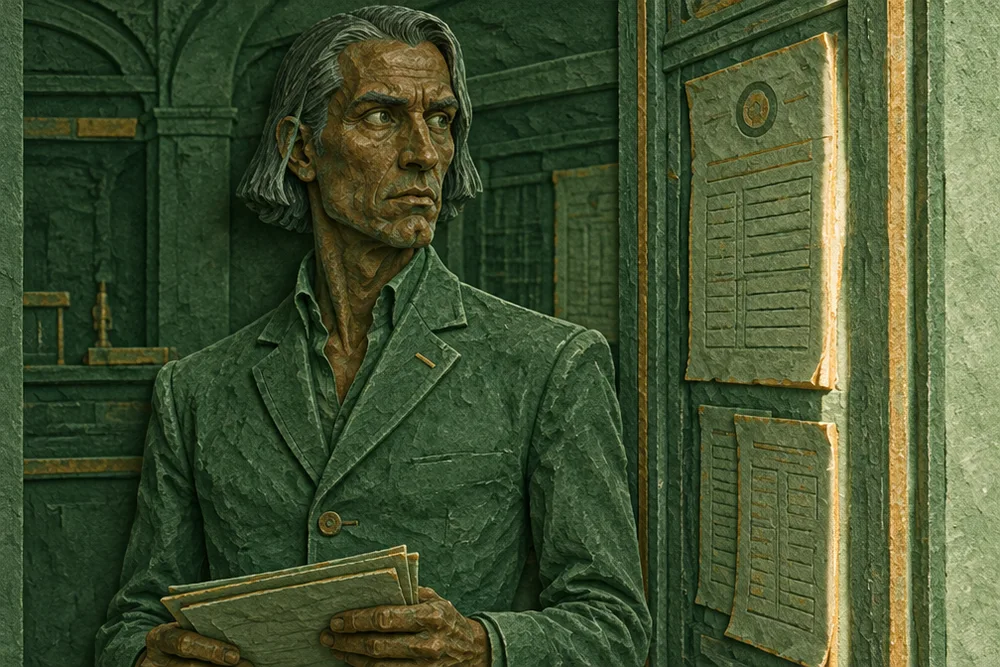
He held up the wage sheets. “My people need to see I’m not cutting them loose to buy a public favor.”
Xanthe stepped aside so he could reach the column. “Then post the wages with the support.”
Tavin pinned the payroll notices first, one sheet after another, smoothing each corner with his long fingers. The hotel’s kitchen workers, porters and store hands would receive the wages already promised through the crossing, even if the vault opened on fewer shelves. Beside them he fixed a statement of conditional support: the Heel House would release most of its purchased frost, accept the limited shared-storage schedule and claim the listed refund before the balance was divided among delivery and night labor.
“Four shelves instead of nine,” he said, checking the text. “I can keep the kitchens supplied for the climb if I turn away the bulk orders. The dining room will have to buy more often.”
“And the shared shelves?”
“A kitchen buyer has agreed to rent space. It won’t carry every order, but it means the smaller kitchens get something they can actually use.”
“You have the refund line?”
He pointed to it. The duplicate-sale proceeds would be frozen for restitution. Tavin’s valid purchase would be repaid first from the frozen balance, leaving only a small remainder for the night crew and the reduced orchard draw. No one had found a hidden reserve; the arithmetic was merely less cruel when written openly.
“If the proposition fails,” he said, “I can still enforce the purchase I paid for.”