A Fair Share of Winter
Page 145 of 286
Chapters
She had been thinking of shelves the way she thought of orchard rows: a length of pipe, a stop at the end, a certain draw to bring each run down. Here there was also a hole the size of the door, and the man paying for the cold had just held it open for one box.
“Can you count out there?” she asked.
“In summer I can reject a box out there,” Tavin said. “Count it, no. Not if the next thing I have to do is bring it off a warm stair. And I won’t have a crowd of buyers in the vault doing their own counts.”
Mera lifted the cover of her basket. Inside was a small lidded order crock, wrapped in a square of cloth. She picked it up by the cloth and set it on the end of the crate. The cloth relaxed around it without coming undone. “The buyers can put their counts on the outside before they send a load. Your keeper checks the marks at the door. If the marks and the load agree, the buyer gets a receipt for what came in. The actual count can wait until the keeper’s inside with the door shut.”
“And if the marks don’t agree?”
“Then we get a receipt like the one you just gave him.”
Tavin reached out and turned the crock until the knot faced him. He could have read a tag there without bending or walking around the crate. He turned it back to Mera. “Outside marks won’t tell me somebody’s put a cracked pot under two sound ones.”
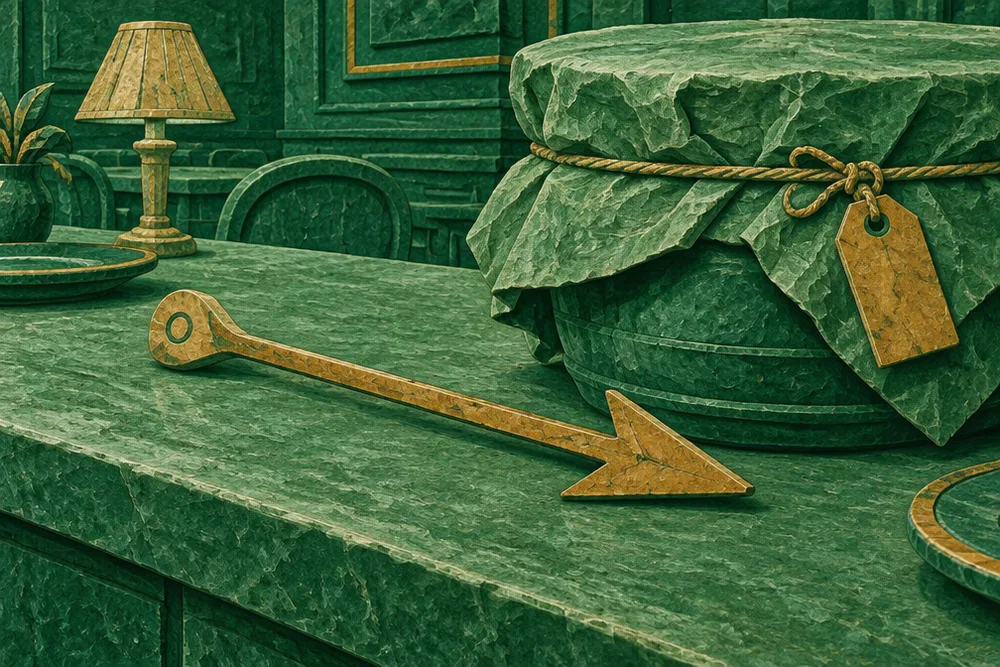
“No,” she said. “But they’ll tell you whose pot it was.”
Xanthe watched him glance at the red pointer again. This time he did not reach up to reset it. He went to fetch the ledger.
Tavin opened the ledger to a page ruled across the middle. Above the rule were the keeper’s hours. Below it, in smaller writing, were the hours charged to the kitchen for carrying, scouring and putting the store to rights. Xanthe could pick out the same initials on both sides.
“Is that the third shift?” she asked.
“Those are people from the kitchen making up bits of it. The keeper can’t carry orders upstairs and take deliveries at the same time.”
He put a fingernail beside one line. It ran from the afternoon delivery bell to the clearing of the dining room. A stroke in the middle divided it into two apparently tidy pieces. On one side the worker belonged to the store; on the other, to the kitchen.