Who Gets the Dry Hours
Page 88 of 226
Chapters
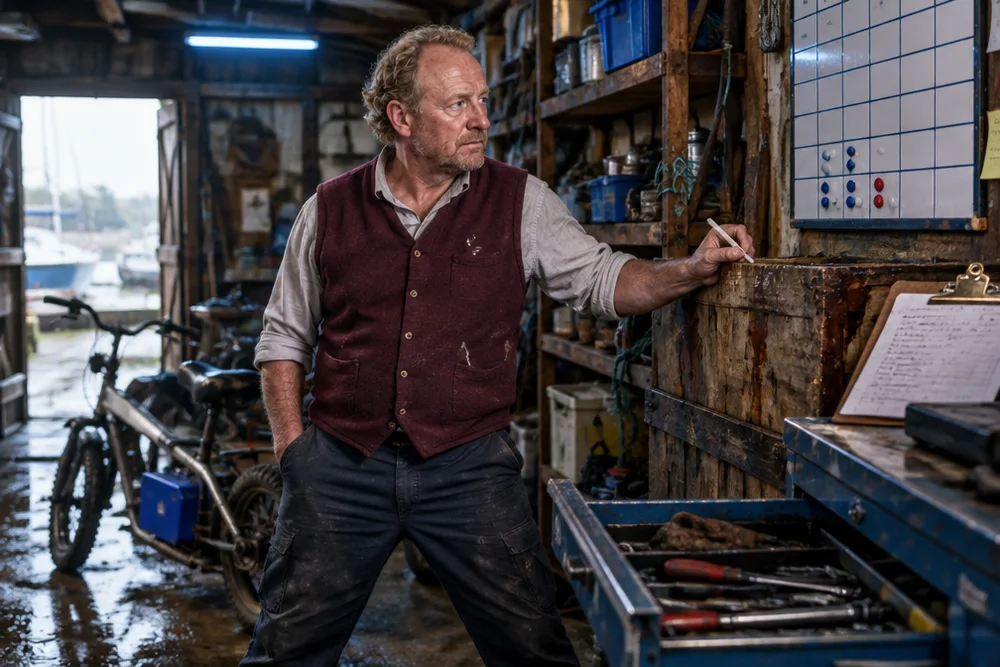
“This is why I made the offer,” he said. “They need a place where they can set a tool down without wondering whether the next storm has got to it.”
Qamar traced the dimensions of a tool case in her notes. It would fit a Relay locker, with enough room for the lid. She did not write that the locker would solve everything. She had learned what a clean empty column could conceal.
“If the public lease wins, we could offer you some lockers,” she said. “A fixed rent for each one. The access rules would be written down, and the operator could open the room during the storage hours.”
“Some?”
“We have six. I don’t know how many the cleaners or other users might need. I can’t promise all of them to you.”
Oren shut a drawer with his hip. “And you think that will make the town’s budget work?”
“It might help. It won’t cover all of it.”
“There’s your problem.”
“There’s the problem,” Qamar corrected. “If I said the lockers could do everything, the numbers would be false.”
He studied her for a moment, then took the grease pencil out of his vest and made a note on the side of a crate. “The cooperative can pay for two if the public lease wins. Maybe three, if the council lets us have reliable access and the rental price is reasonable.”
“That’s not a promise?”
“Not yet. I’m telling you what the crew might actually use.” He returned the pencil to his vest. “My exclusive bid stays. I’m not giving up a sure arrangement for three lockers and a committee.”
“I wouldn’t ask you to.”
“You already have.”
Qamar glanced at the shed’s crowded shelves. “I asked you to consider a different arrangement. You said no. That’s useful to know.”
Oren’s mouth twitched, not quite a smile. “You always did like putting a neat label on an argument.”
She wrote down two or three lockers, conditional on the public lease, and circled the question of access. A possibility was not income until someone agreed to the terms. Still, it was more than the empty line she had brought with her.
At Relay, Mahira had spread the current budget across the folding table. The powered bench was empty, but its blue indicator light blinked steadily. Salt film dulled the lower edges of the room’s metal fittings. Qamar set the clipboard beside the invoices and told Mahira what she had learned: the crates, the small tools, the two-or-three-locker offer, the access question and the unchanged exclusive bid.