Who Gets the Dry Hours
Page 34 of 226
Chapters
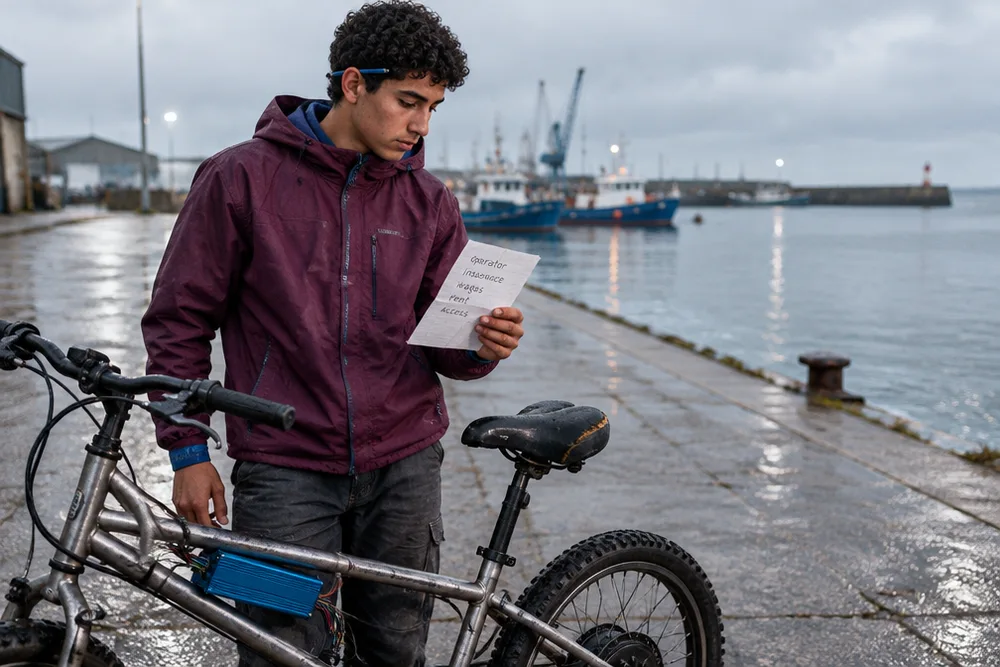
Outside, the pavement sloped toward the harbor. Qamar stopped beside the bike and read the words she had written: operator, insurance, wages, rent, access. They looked simple in a row. Each one opened onto another question.
Mahira had described work that did not appear on a bill. The clerk had described work that had to appear on one. Oren could pay for the room because his cooperative could count its dues and rusted tools. A public lease would need to count things differently without pretending they cost nothing.
Qamar called the workshop. Mahira answered after two rings.
“What do you think it costs to open Relay for one evening?” Qamar asked.
“Depends who opens it. Depends whether someone cleans before or after. Depends what breaks.”
“Can you give me a number?”
“I can give you hours. The number depends on what you’re paying me.” There was a pause, and Qamar could hear a drawer slide shut. “Don’t put down a number you got by asking me to do it for free.”
“I won’t.”
“Good. And don’t promise the room to anyone before the council decides.”
“I’m not.”
The call ended. Qamar put the phone away and looked at her bike. The seat remained bare, black, and split along one edge. Three evenings had been reserved for it before the lease notice appeared. Now each hour seemed to have at least two owners.
She could take Oren’s offer, finish the build as best she could, and let the council choose the bid that came with a reliable payment. Or she could put forward a public plan without knowing whether anyone could run it. A plan was not a place to work. It could not give her a bench.
At Relay, Oren had returned to gather his tape measure. He and Mahira were speaking beside the doorway, their voices low enough that Qamar couldn’t make out the words. When she entered, he rolled the tape closed and tucked it into his vest.
“I can hold that evening slot until the council’s decision,” he said. “You wouldn’t have to finish today.”
Qamar looked at the white rack lines again. The final slot would help. It might be the difference between an unfinished project and a bike she could take to an interview. But the price of it was no longer invisible. If she took it, she would be accepting the only bid on the table as the room’s likely future.
“I can’t take the slot,” she said.