Who Gets the Dry Hours
Page 199 of 226
Chapters
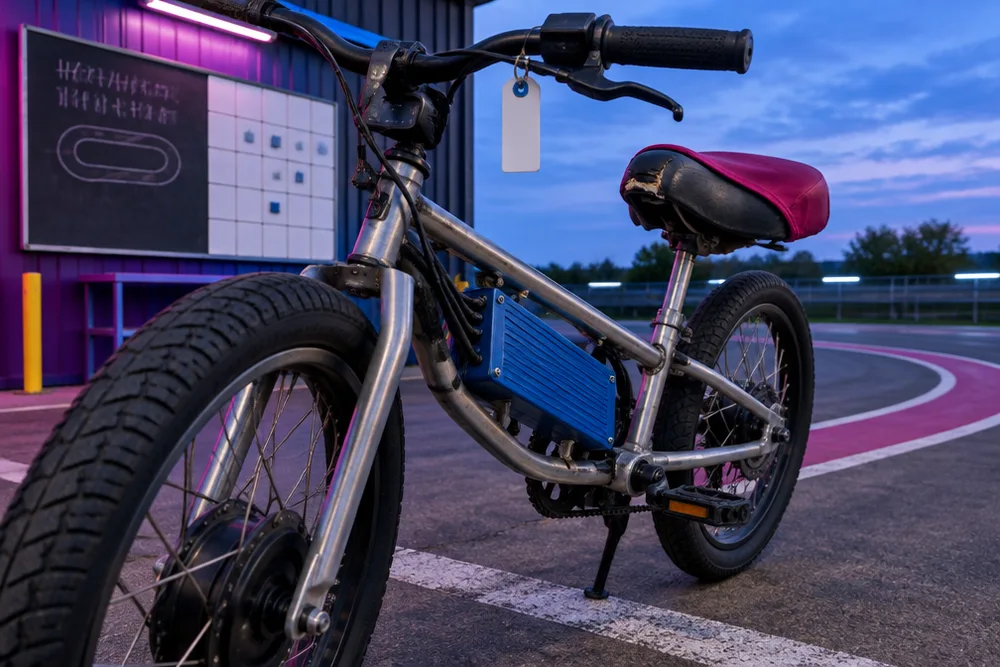
The woman with the clipboard led Qamar to the test loop, a dry strip of pavement painted with a start line and a tight return curve. The surface had been swept. A low barrier separated it from the working bays. Qamar fitted the battery, checked the connector, and switched on the system. The blue indicator lit.
“Tell us what you’ll demonstrate,” said the interviewer with the grease pencil.
“A short, loaded ride on the dry loop. I’ll check the saddle before and after. I’m not demonstrating it for all-weather fleet use.”
“Why not?”
“The cover is new, and the bike hasn’t had weather testing. The clamp is replaced and has held under a short load check, but I haven’t logged enough use to release it for general service. The tag lists what remains.”
The interviewer glanced at the tag. “You wrote that yourself?”
“Yes.”
“What would you do first if we put it into service?”
“Supervised weather checks. Then inspect the clamp and cover after each run. If the saddle moves, stop using it until I find why.” Qamar kept her hand on the brake lever. She had expected the question to be about the controller or battery range. Instead, the answer she had prepared in writing was the one she needed.
They asked her to ride the loop. Qamar checked the path once more, then swung onto the saddle. The mulberry cover was firm under her weight, but the crooked seam pressed unevenly against her palm when she gripped the handlebar. She kept her speed low through the turn. At the return line, she stopped without skidding and put one foot down.
“How did it feel?”
“The mount stayed in place. I can’t say yet how the cover will hold up in rain.”
“And if it rains during a route?”
“I’d take it out of service until the checks were complete. If someone needed the vehicle, I’d find another one rather than call this safe.”
She dismounted and checked the saddle. No shift. She touched the clamp, inspected the cover edge, and looked for a pulled stitch. The seam remained crooked, but it had not opened. The interviewers watched without speaking. Qamar felt the familiar urge to make the work look finished. She resisted it and recorded the check on the tag’s back, noting the dry loop and the short test.
“That’s enough,” the clipboard woman said. “Bring it back to the stand, and then we’ll talk.”
Qamar powered down. The indicator went dark.