Who Gets the Dry Hours
Page 184 of 226
Chapters
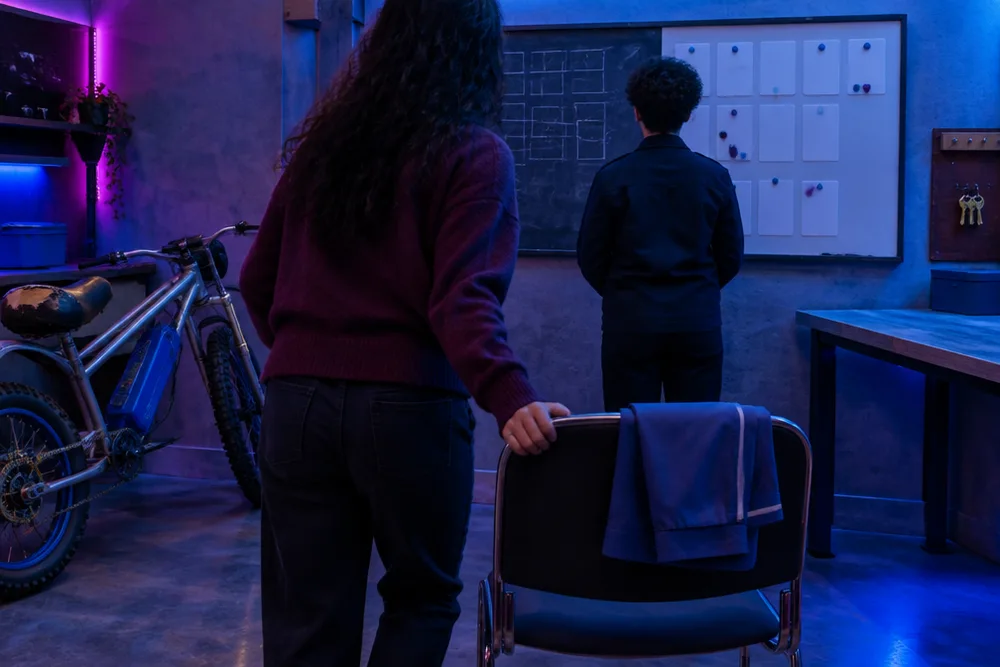
“How much can you spare?” Qamar asked.
“Ten minutes to show you the stitch. If you’re slow, you’ll have to keep going on your own.”
“Ten is good.”
Inez’s shoulders eased, only slightly. She pulled the chair around to face the table and moved her own folded uniform out of the work area. “Then don’t bring oily fingers over here. Wipe the saddle first.”
Qamar fetched a clean rag and wiped the shell, taking care around the split so the torn edge would not curl farther. Inez watched her use the rag, then handed her a scrap of mulberry fabric from the repair pile. It was not the same material as the saddle cover, but the weave was close enough for practice.
“This is not a proper replacement,” Inez said. “It’s just a patch. And the seam won’t make the cover weatherproof. You understand?”
“Yes.”
“Say what you understand.”
Qamar paused, surprised by the correction. “It can stop the edge from catching while I ride the dry loop, but it doesn’t make the saddle ready for all-weather use.”
“Better.” Inez set a needle and dark thread on the table. “You can use that scrap to learn. If the real cover is too far gone, you don’t pretend stitching fixes the shell.”
Qamar picked up the needle. Her hands were steady with small screws, but the needle felt too thin to trust. She threaded it on her second try. Inez showed her how to make the first knot and how to hold the cloth so the edge did not roll under her fingers.
“Don’t pull hard,” Inez said. “You’re gathering it.”
Qamar eased the thread back. “It’s already crooked.”
“That’s why it’s a scrap.” Inez held the fabric at one end and tilted it so Qamar could see the line of holes. “Take smaller bites around the curve. Don’t try to force the fabric into a straight line. Let it turn.”
The lesson was less like following instructions from a manual than listening to a machine change pitch. Inez did not tell Qamar every movement before she made it. She let Qamar try, then pointed to what the thread had done. The stitch looked wrong before it looked useful. Qamar wanted to pull it out and begin again. The clock made each tug feel expensive.
“You’re fighting the curve,” Inez said. “Turn the piece. The needle goes where the cloth is, not where you wish it were.”
Qamar rotated the scrap a little at a time. She could feel the thread take tension, then release. On the next stitch she went through the fabric too far from the edge. Inez tapped the spot with one blunt fingertip.