Who Gets the Dry Hours
Page 157 of 226
Chapters
Qamar appreciated the refusal more than a promise. A cheap concession offered in a room full of witnesses could have become a debt, something the cooperative might later expect her to repay with the schedule. The council chair said the choice would be made on the evidence before them: a funded public lease with a six-month review, or the cooperative’s exclusive bid. Nobody could claim the first option had no cost. The rent from the lockers would help, the town subsidy would be capped, and the reserve for backup staffing would limit how many missed shifts they could absorb.
The hearing paused while the councillors reviewed their notes. Qamar rubbed her thumbnail against a rough edge of the folder. Her bike’s rear wheel was fitted; its saddle still shifted on the clamp when she tested it hard. She had three evenings left for it when this chapter of the plan began, and now the lease decision had swallowed another piece of time. Yet she did not wish she had stayed away. That was different from wishing the outcome would be easy.
When the chair called the vote, the room quieted enough for Qamar to hear a loose fluorescent strip buzz overhead. The first councillor voted for the public lease. The next did too, then paused to add that the six-month review mattered. The third voted against it, saying the cooperative’s rent was more certain. A fourth asked for the staffing costs to be published with the review report, then voted yes. The chair read the final count and declared the public lease approved, with the community center as financial administrator, user-delegated scheduling, a reserve floor for paid backup coverage, and a six-month review.
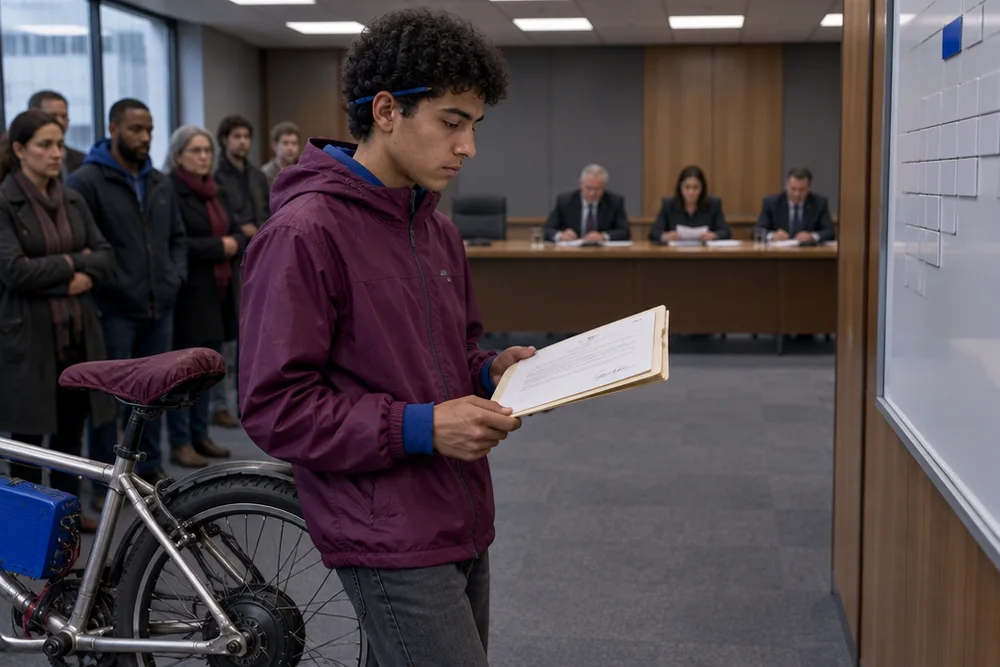
For one beat, nobody moved. Then a few people clapped—short, uncertain sounds in the old utility room. Oren rolled up his plan carefully. He did not congratulate Qamar, and she did not thank him for losing. “I’ll have the locker contract ready by the date in the exhibit,” he said to the clerk. “If the center sends the terms as written, my crew can sign.” The clerk nodded. His offer had helped keep the public option solvent; his higher bid had almost beaten it. Both things were true, and neither made him a villain.
Mahira stood and slid the brass keys into her apron pocket. Qamar reached for the folder, then waited while the clerk handed her the signed decision. The approval did not give her a bench. It did not promise that the timetable would bend around her interview deadline. It made the timetable possible, and placed it in other hands.