Who Gets the Dry Hours
Page 143 of 226
Chapters
“Not if a block that didn’t happen gets counted as nothing.” He touched the paper with one knuckle, careful not to smudge her pencil marks. “Somebody sees empty hours and says nobody needed them. But we did. People came.”
Qamar glanced toward the narrow aisle. On the wall, white magnetic tiles showed the trial’s bookings. The canceled block still had a tile. She had left it there because removing it would be inaccurate, but on the report she was trying to make the same absence disappear in words. “The council could use it against the lease.”
“They could use the cost against it too,” Davi said. “That’s still what happened.”
He did not sound accusing. That was worse. If he had accused her, she could have defended the form, the deadline, the fact that she had counted the hours herself. Instead, he waited, shoulders tipped forward, letting her choose whether to answer.
Qamar drew a short line through the empty space and wrote: ONE BLOCK CLOSED—NO AUTHORIZED OPENER AVAILABLE. The pencil dug in at the last word. “There. But it doesn’t say whether the system worked.”
“It says what the system did.” Davi pulled out a chair. “That’s enough to start arguing from.”
Qamar checked the time against the note from the clerk. The report had to be ready before the morning circulation. “Then we need the price of what happened next.”
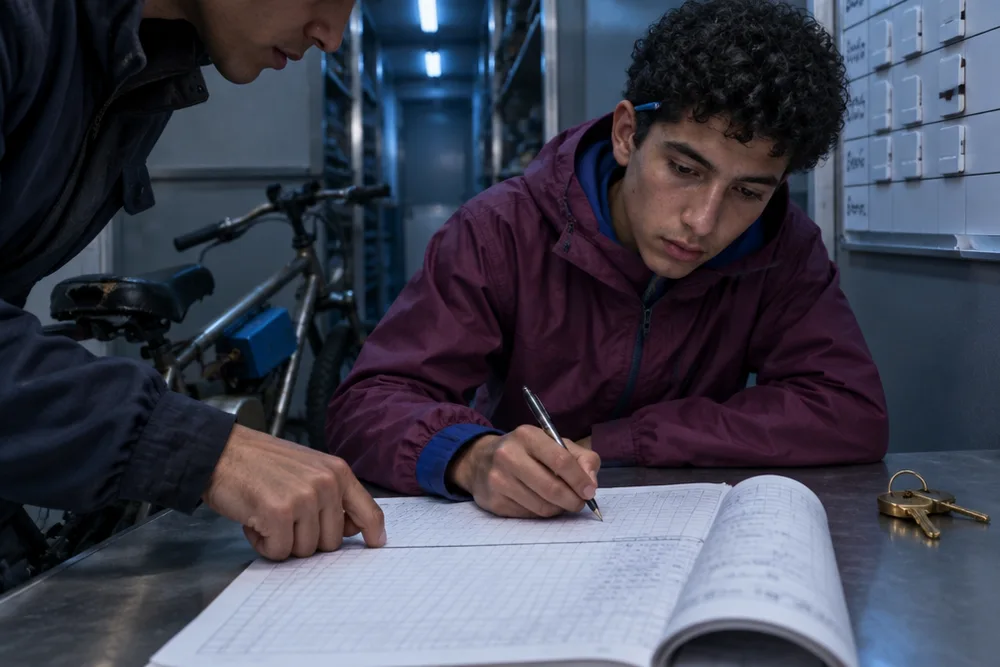
They found the cost in three places. The community center’s invoice recorded the paid backup opener’s hours. Mahira’s training log listed the time she had spent showing the opener how to check the breaker, the emergency stop, and the sign-in board. The trial notes recorded the canceled block’s users waiting on the landing while the center confirmed coverage. The papers did not line up neatly: one charged by the quarter hour, another by the session, and the notes had been written in Qamar’s tight pencil hand between questions.
Mahira came in carrying her brass keys and a paper cup of tea. She had been supervising the final trial block, not staying to clean up; that boundary had taken weeks to establish, and Qamar had learned not to mistake it for a lack of care. She set the cup well away from the papers and leaned over them, elbows held wide.
“You can’t call my training time free,” Mahira said. Her heavy eyelids lowered as she read the totals. “If you put zero here, they will decide the opener can be trained by air.”
“I wasn’t going to.”
“You were thinking about it.”
Qamar lifted her eyes. “I was thinking about what happens if they see the number and choose the boat bid.”