Who Gets the Dry Hours
Page 130 of 226
Chapters
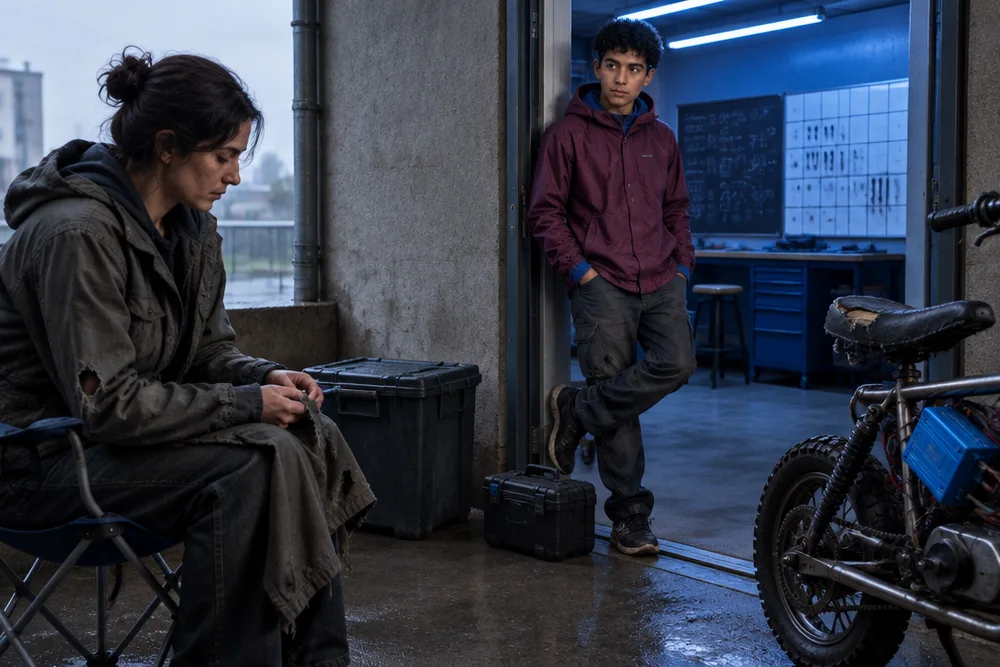
A knock came on the open door. The woman with the torn jacket leaned in. “We were told the opener might be late. We can wait.” Her eyes moved from Mahira’s apron to the keys. “Or we can go. Just let us know.” She had not raised her voice; that made the offer heavier. Qamar looked to Mahira, but Mahira did not reach for the ring. A day off, Qamar understood, was not a private luxury if everyone else could quietly spend it for her.
“The room can’t open without a rostered person,” Qamar said. “That’s the trial rule.” The woman nodded once. “Then we’ll wait on the landing.” She and her companion stepped back from the threshold. Their faces did not accuse Qamar. They made it worse: they accepted what she had said and would bear the result. Qamar went to the board and wrote the block’s start time beside the red mark, then added CLOSED—NO AUTHORIZED OPENER. Her chalk hand pressed hard enough to snap the tip. Mahira’s keys remained on the table. No one reached for them.
Qamar carried a folding chair and a dry crate to the landing. The landing was sheltered by the workshop’s upper wall, above the flood line, though the wind pushed damp air through the narrow passage. She moved the crate away from the door so nobody would have to stand in the threshold. The woman with the jacket sat and placed the garment across her knees. Her companion put the tool case beside his boots. “It’s not a work station,” Qamar told them. “I know,” the woman said. She pinched a frayed cuff between her fingers. “It’s a place to wait.”
A third user arrived, then another, each glancing at the board before choosing whether to stay. Qamar wrote the names of no one. Instead, she noted how many had come and what they had planned to do: two sewing repairs, one small-tool adjustment, one pickup. The numbers were evidence, not a list of who had been inconvenienced. A gust lifted the woman’s jacket hem. Qamar held the door long enough for her to settle it, then let it close gently. Behind her, the powered bench stayed dark.
Mahira came out carrying two cups of water, not the keys. She gave one to Qamar and kept the other. “I could have opened,” she said. “You could have,” Qamar replied. “That’s not the same as being required to.” Mahira drank, her gaze on the water shining in the lower passage beyond the stairs. It would rise again with the tide, wetting the route that some of the users had taken to get here. “If nobody else can do it, the whole plan rests on one person,” she said. “If I do it, it rests on me.”