Who Gets the Dry Hours
Page 115 of 226
Chapters
Inez studied her face for a moment, perhaps checking that the promise was not another unasked question mistaken for agreement. Then she turned toward the posted sewing block. “We’ll see how it works.”
Qamar moved aside so Inez could read the whole schedule without standing close to her. On the white sheet, the bookings were still empty. The trial had not begun, and the vote remained ahead. She left room at the bottom for corrections.
That evening Qamar went back to the Meter Room with the trial packet. The audience chairs had been pushed into rows, leaving the old utility windows exposed behind the speakers. From this angle the glass reflected the fluorescent strips and the empty lectern. The hearing had changed the proposal without resolving it: one week, supervised; one report, honest about cost; then the council would choose between the public lease and Oren’s guaranteed rent.
She placed the revised schedule beside the budget. The trial’s first block began the next morning, but it did not include her. Her three planned evenings were no longer available as private reservations. She had not asked the clerk to restore them. The choice was not simple generosity. The bike was still unfinished, and the interview deadline did not move because the town had a hearing.
She wrote a note to herself on the inside cover of the folder: keep the bike safe; do not promise more than the test proves. Then she crossed out the first line, because it was too vague. She wrote: check the clamp; check saddle movement under load; test only on a dry route. The specific tasks steadied her more than the broad intention.
Mahira came to the doorway with her coat on. “Are you coming?”
“I need to leave the trial file here.”
“It can stay in the cabinet.” Mahira did not offer the keys. “I’m off shift after this. The coordinator has the close.”
Qamar shut the folder. She had once thought that a key was proof of belonging. Now she watched Mahira leave without it, her brass ring in her apron pocket, and understood that being allowed to go home was part of what the lease had to protect.
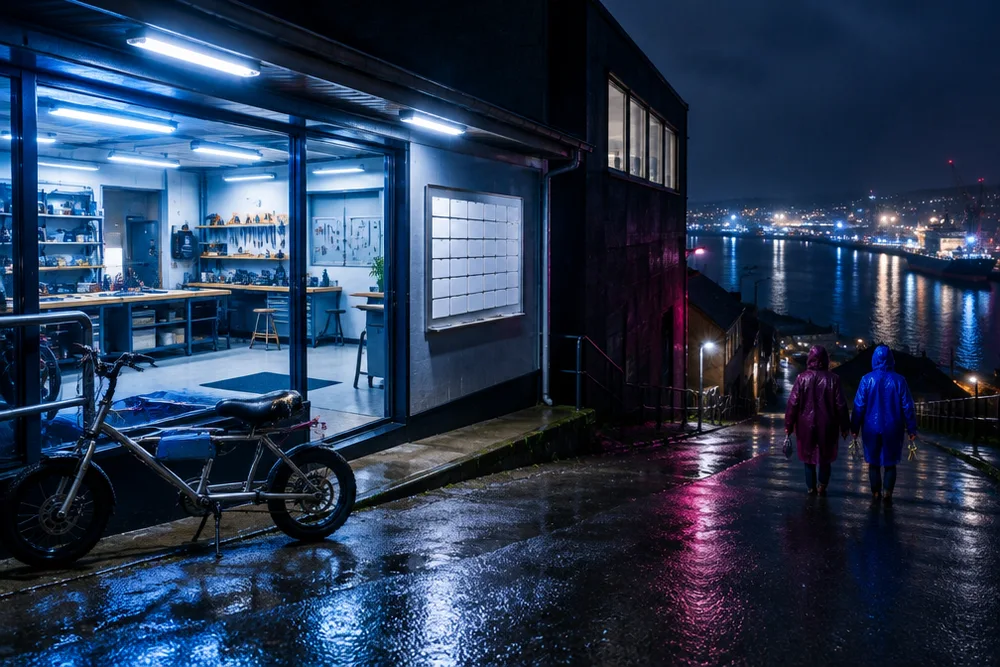
They walked uphill together. The harbor wind pushed the rain shells against their legs. Behind them, the workshop LEDs remained on for the coordinator’s final check, and the board faced the entrance with its empty booking squares waiting to be filled.
“They may still choose the boat bid,” Qamar said.
“They may.”
“The public numbers might not be enough.”
“Then we’ll know what wasn’t enough,” Mahira said. “And who paid for the hours we counted.”