Who Gets the Dry Hours
Page 104 of 226
Chapters
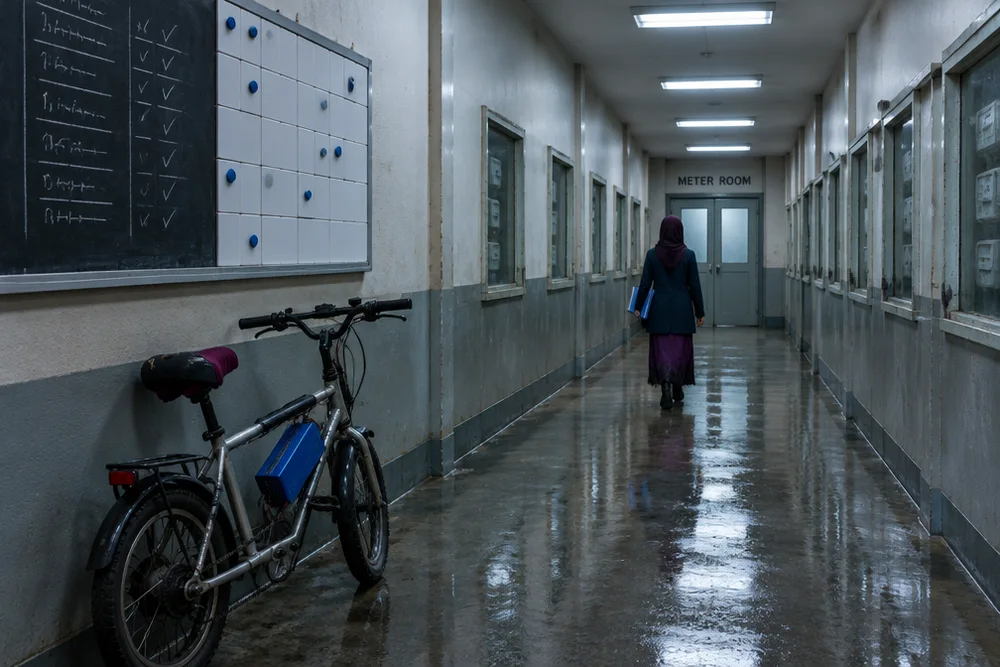
She closed the folder. The question at the top of the clerk’s note—who answers if something goes wrong?—had not been answered with one convenient person. It had been answered with divided responsibilities, paid hours, and a process that could be inspected. Whether the council would honor that division was still uncertain. Qamar carried the draft to the door, then checked that every page was inside before she left.
On the morning of Day 15, Qamar filed the completed split with the clerk: financial oversight and insurance under the community center, scheduling delegated to users, and paid supervision under the limits Mahira had accepted. The user-group selection and anonymous review process were attached as trial conditions rather than claims already fulfilled. The budget listed opener wages, training, the administration cap, and the conditional income from rented dry lockers. The numbers remained tight. They did not assume that anyone would work for free.
The clerk checked the pages, then pressed the receipt stamp onto the cover. “This is the version the council will see.”
Qamar nodded. “And if they change the authority section?”
“You can speak to the change at the hearing.”
She took the folder and went out into the cool air. The hearing was still hours away. She had no guarantee that the council would accept the split, or that the center’s board would stay committed once they saw the full cost. She had not secured a single workshop hour for herself. The draft merely made those facts visible, which was not the same as making them easy.
At Relay, she laid the receipt copy on the clean folding table. The aisle had been cleared, but the objects along both walls made it look narrow. She could picture the users moving through it in the blocks they would eventually choose: cleaners with uniforms, Davi with cart parts, someone at the powered bench, an opener checking the room before locking it. None of them would fit because Qamar had wished hard enough. They would fit only if the schedule and the work of keeping it open were both real.
She left the chalk marks untouched. There was still a hearing to face, and a trial to test, and the possibility that the boat cooperative’s higher offer would look safer to the council. The operator line had been filled, but the authority behind it had been divided. Qamar tucked the folder under her arm and headed back toward the Meter Room, carrying a plan that could be refused—and could no longer be mistaken for a favor.