Where the Lost Mugs Go
Page 134 of 156
Chapters
The final safety check took place on Wednesday. The alarm separated the staff room as promised; the toilet was accessible from the waiting space, and its new sign could be read from the corridor. Nessa tested the street door herself, then recorded the latch’s condition on the opening checklist. It closed without sticking. Mr. Hales signed the inspection form and gave her a copy of the room key. The key was plain brass, marked with a small green tag. It did not fit any door in the depot.
The first opening date went onto the noticeboard by the Bracken House street entrance. The notice listed Tuesday and Thursday, the hours, and the final feeder connection. It said that a paid worker would be present. It also gave a phone number to call if the room had to close unexpectedly. Nessa pinned it level, stepped back, then moved it a fraction because the bottom edge had curled over the tack.
She put the remaining temporary mugs in a crate at the room’s far wall. The crate included those the depot regulars had chosen for communal use, with their names and descriptions recorded on a card. The sturdy ones had been washed and dried; the chipped ones stayed in storage. Ada’s cream mug was not among them. Nessa had not asked Ruth what she would do with it, and Ruth had not told her. That was no longer an unanswered question Nessa was entitled to fill in.
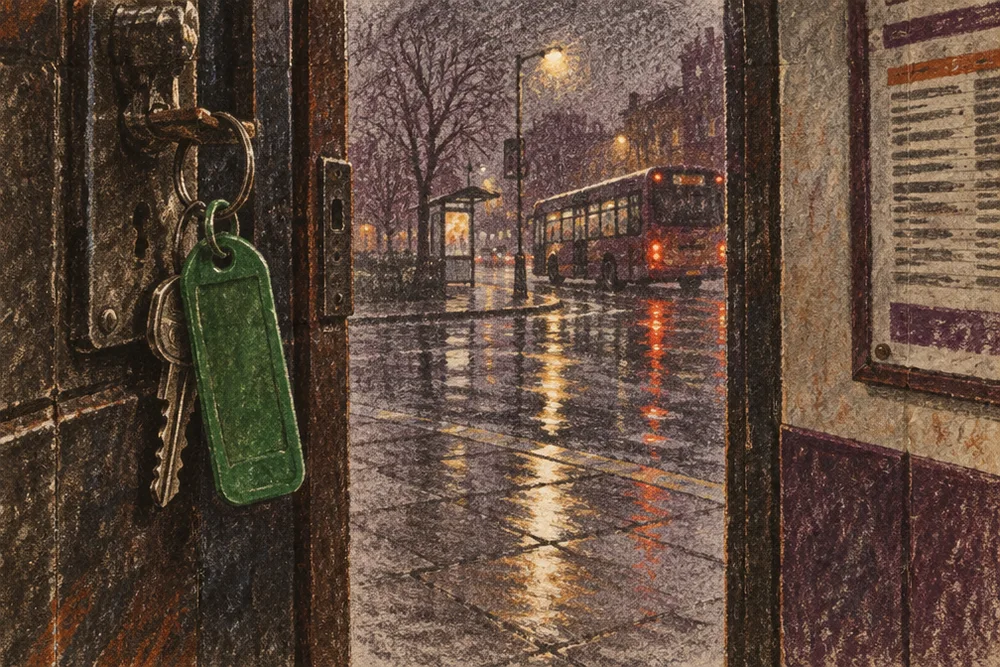
On Thursday evening, Peter arrived ten minutes early to learn the opening routine. Nessa showed him the door, the alarm panel, the toilet checklist, and the place where delays would be recorded. They read the closing procedure aloud. If the feeder was delayed, they would wait while the bus remained in service and the paid shift allowed; if the delay exceeded the funded limit, they would call the operator and follow the agreed fallback rather than stay unpaid. Peter asked what happened if a person was still on the way from the interchange when they had to close.
“We call them if we can,” Nessa said. “And we put the actual time in the log. We don’t promise that someone can always stay.”
“Right,” Peter said. He looked at the checklist again. “That’s better than pretending.”