When the Streetlights Grew Leaves
Page 47 of 207
Chapters
“I won’t.”
Iona carried the second copy to the Kilnside council room before the midday bell. It lay above the workshops, with soot caught in the window seams and a long table scarred by tools dragged across it during budget hearings. Three council members were present, along with a tenants’ representative who had objected to the leafing lamp’s capped feed. He recognized Iona and leaned back when she entered.
“You’re asking us to lend current to a branch we’ve been told to remove,” he said.
“I’m asking for a one-night trial, with a cap no higher than its present limit. The lamp stays on its own circuit until the cutting is taken. The trial ends at the sixth morning bell or earlier if either witness calls a halt.”
“And if Reedbank draws more than its share?”
“The instruments will show what each source supplied and what the junction lost. The cap is a fraction of spare supply, not an equal number. No one can borrow from the other side without the meters showing it.”
“Meters,” the tenants’ representative said, as if the word had turned bitter in his mouth.
Iona placed the two readings from the landing before them. “These disagree because they measure different points. The ferry junction will have one point, and both witnesses can inspect it. If the readings disagree there, the junction opens.”
One council member, a woman with a brass pin shaped like a shutter, turned the agreement around. “You’ve said the trial doesn’t settle the blackout dispute.”
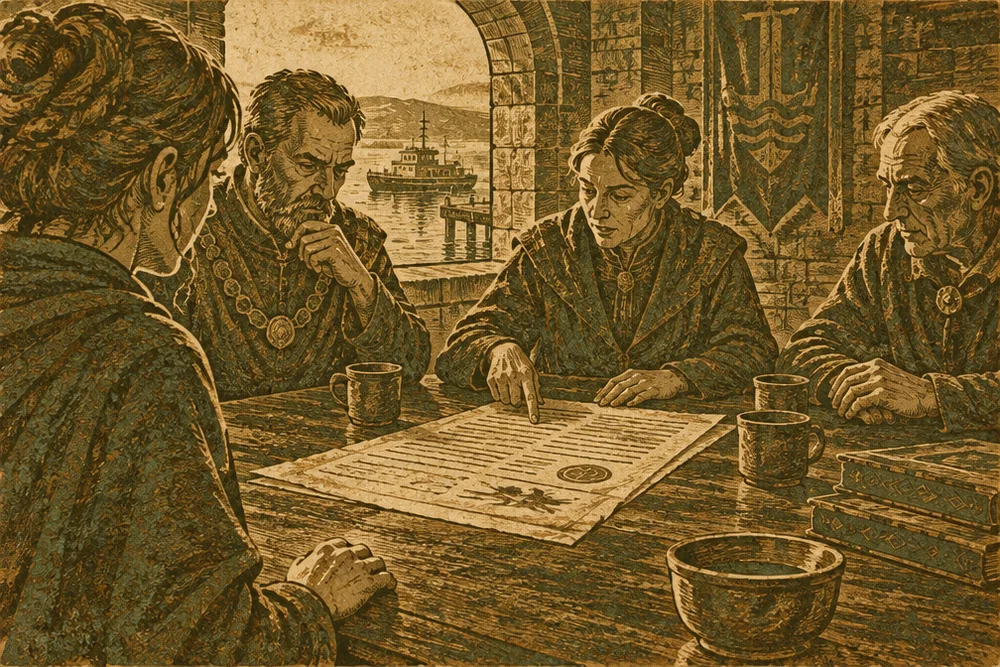
“It cannot settle it. It can only show whether two supplies can balance through a living cutting without one being hidden inside the other.”
“And the voice?”
“Not a witness. Not an authorization. We are agreeing only to carry current.”
The tenants’ representative’s fingers drummed against the table. “You make it sound as if we give nothing up.”
“We give up a night of control over the test. We accept a measured loss if the branch fails. And we agree not to call that loss proof that Reedbank owes us.”
His drumming stopped.
The council talked without Iona for ten minutes. She waited beside the door, feeling the weight of her badge and the small folded paper in her pocket: the lift schedule Orr kept for the residents who depended on it. If her credentials were taken, the city could stop her pay. She had not told the council that a personal risk made the trial better. It only made it hers.
At last the woman with the shutter pin signed the assent line. The tenants’ representative signed beneath her, adding, “For this trial only.”