When the Streetlights Grew Leaves
Page 38 of 207
Chapters
“The citation tells anyone how to find the original.”
“That doesn’t authorize reproduction.”
One of the workshop hands pointed at the report. “It says they cut Reedbank off.”
“It says there was a deliberate isolation,” the runner answered. “That’s not the same as saying the city had a choice.”
“Then let us see the rest of the numbers,” Iona said. “Don’t take the only copy away.”
The runner hesitated. He had come expecting an apprentice to obey a stamp. Iona could see the calculation in his face, the same careful tally she made before touching a live panel: risk on one side, cost on the other. At last he set his case on the ledge without opening it.
“I’m required to report the posting,” he said. “The board will decide whether it stays.”
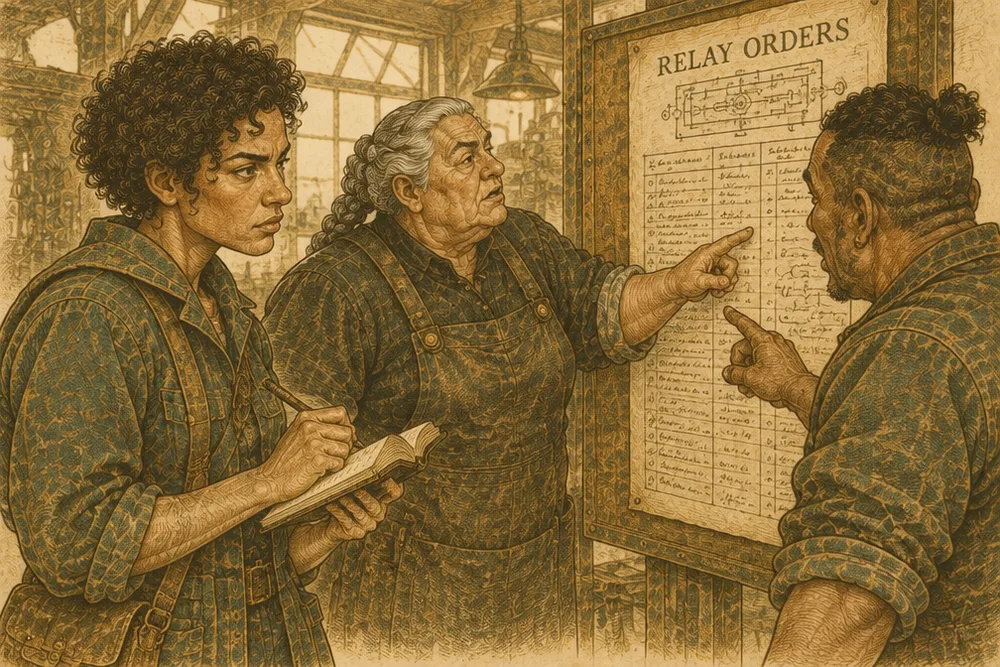
“Then report that it is cited and exact.”
He made a note on a small pad. The people around the notice board drew closer but did not touch the pages. Their questions came in fragments: Had the load been too high? Were the lifts kept running? Was Reedbank flooded before or after the feeder opened? What did the clause mean? Iona answered only with what was on the paper. The rest would need another record, or a person willing to speak.
A woman from the lower workshops wanted a copy to carry to the river. Iona told her the archive reference and offered to make one later, with the same full pages. She copied the citation onto the back of a shift notice, then went out through the gate toward the bridge road.
Behind Iona, the first reader was already explaining the report to a third man. No one used the word blackout. They called it the interruption, then the isolation, then, finally, the decision. The shift in language was slight, but Iona felt it happen.
The runner closed his stamp case. “I’ll need your apprentice number.”
She gave it to him. Her work credential hung from a cord inside her coat, its stamped face worn smooth at the edges. He wrote the number down, careful not to look pleased or sorry.
At the end of the yard, a handbell rang from the public message post. A Reedbank ferry clerk had come up the hill with a canvas satchel and a slate-board sign tucked under one arm. He was broad in the hips, his shaved sides stark beneath a high knot, and the cuffs of his oilskin were patterned in black and pale squares.