When the Streetlights Grew Leaves
Page 197 of 207
Chapters
“Was it a person?” the child asked.
His mother glanced toward Iona, worried she had asked too much on his behalf.
Iona crouched slightly so she could answer without making the lamp the center of the conversation. “It chose a picture to show us. That’s what we know.”
The child considered this, then nodded as if it were enough. He went back to his mother. Iona straightened, her knees aching from the damp boards. She did not know whether Tern had heard the question, understood it, or marked only the sounds and the quiet that followed. The portrait was not a body; the public record said so. The distinction was a small thing to write and a large thing to protect.
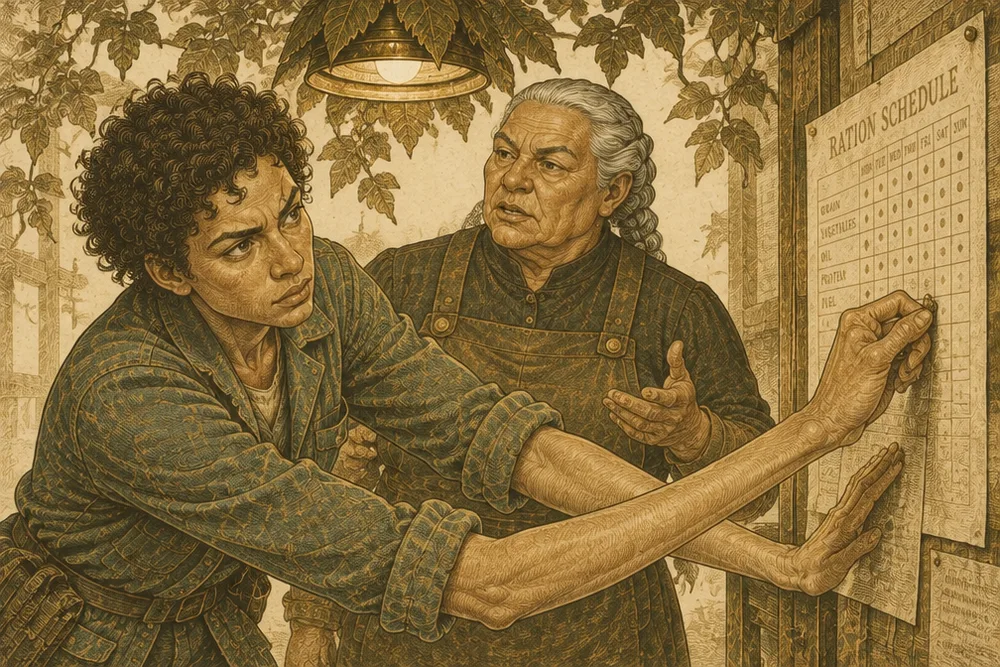
The crowd began to break apart. Reedbank’s gardeners gathered their tools and crossed to the lower path. The Kilnside tenants started toward the ferry, comparing the ration notice pinned to the landing post. It showed the next week’s service intervals, the hours when workshops would be dimmed, and the reserve set aside for lifts, pumps, and public lamps. No line was marked “guaranteed” without a number beside it.
Vale remained at the table, copying the portrait record into the joint ledger. “The city will ask for the original exhibit,” he said. “The lamp, I mean. They’ll want to catalogue the core and the projected likeness.”
“They can ask,” Sef replied. “They don’t own it.”
“I know.” Vale’s mouth tightened. “I’m telling you because they will phrase the request as if they do.”
Iona watched him write. Vale had once wanted a system someone could be held accountable for. He still did. The difference was that the people living under the lamps now held the ledger as well as the commissioner. He could not hide a debt in an annex or call a neighborhood’s loss an acceptable margin without leaving a record.
Mera approached Iona. For a moment, her gaze rested on the place where the invalidated sparker’s badge should have been. “You could apply for reinstatement,” she said. “The board might reconsider when the annual reviews settle.”
“Maybe.” Iona turned the ration notice flat against the post where the river breeze had lifted its corner. Her apprenticeship had paid the levy for Orr’s lift service and kept his home reachable. Without municipal credentials, she had no guaranteed wage from the workshop. The district custodians had offered paid work, but it would come from a smaller purse and a more uncertain schedule. “I don’t know if I want the badge back.”