When the Streetlights Grew Leaves
Page 122 of 207
Chapters
“He has a forecast. The difference matters.” Mera stood, and the stool legs grated over the floor. “The shops are carrying this city’s repair burden. They won’t accept a proposal that says their evenings are the first thing to go dark.”
“They’re not first. We’re protecting the lifts, pumps, and public landings.”
“They’ll hear that as you choosing against them.”
“I am choosing what the numbers say.”
Mera looked at her for a long time. Her silver braid was tied at the end with a length of black cord, the knot worn smooth. “You’ll lose your place here.”
Iona’s fingers rested on the slate’s chipped corner. She could picture Orr in his lift chair, sideways on the platform, quilted lap robe over his knees. She could picture him asking if she had made the figures honest, as if honesty were a part that could be fitted into a machine. He had never asked her to keep his lift at someone else’s expense. He had asked her to keep it working.
“Then I’ll lose it,” she said.
Mera’s expression shifted—not surprise, exactly, but the brief hurt of someone hearing a choice become real. “A civic credential doesn’t transfer easily. The private yards won’t hire a sparker who publishes municipal load sheets.”
“They won’t hire me if the city revokes it either.”
“You have a father who depends on that service.”
“I do.”
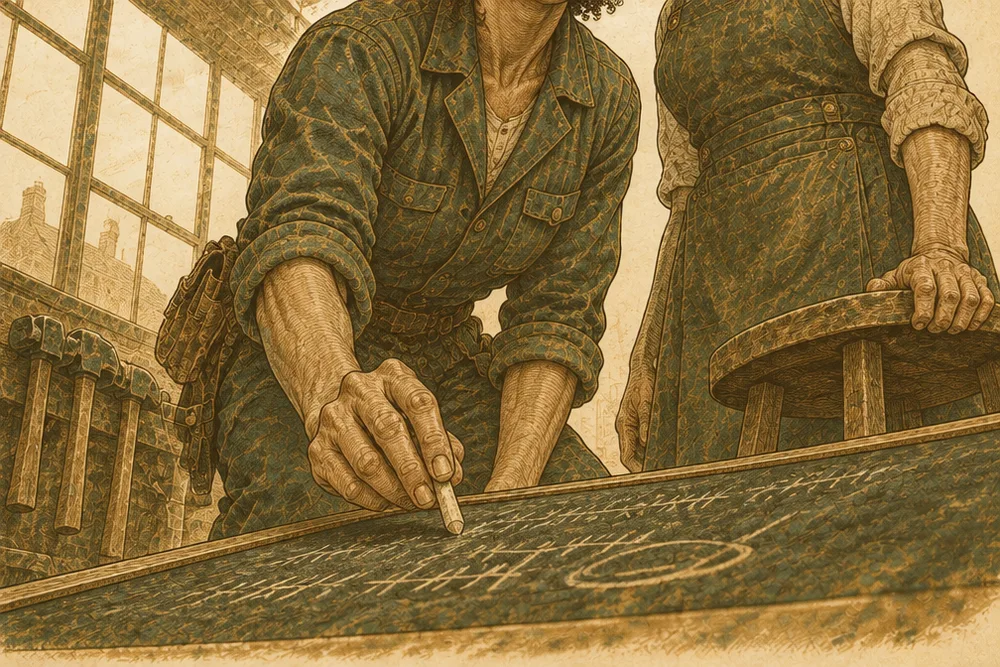
Iona picked up her pencil. On the slate’s lower edge, she wrote: ACTUAL LOSS: WORKSHOP EVENING SERVICE, AVERAGE FOUR HOURS. She added a second line for the range on nights when the reserve fell short. The numbers looked severe but not dramatic. No flourish could make them kinder.
Mera watched the point scratch across the slate. “I offered you a way to keep the plan alive.”
“You offered me a way to make it look alive.”
The sentence came out more sharply than Iona meant. She lowered the pencil. Mera’s mouth tightened, but she did not rebuke her. She only reached for the slate, then stopped before touching it.
“If you publish that,” Mera said, “you’ll be standing alone.”
Iona turned the slate back toward herself. “Not if the numbers are right.”
The public ledger stood under the entrance awning, where any resident could check the city’s current allocations without entering the municipal offices. Its iron shutters were open, and the pages inside hung from rings along a brass rail. The ink had faded in places where rain found its way past the awning. Someone had pinned a strip of Reedbank blue cloth to the corner, marking the disputed service figures.