When the Streetlights Grew Leaves
Page 110 of 207
Chapters
“I know.” Iona tightened the strap across his lap robe. “I’m carrying you anyway.”
They moved one landing at a time. The stair chair scraped against the old iron rails. Each pause let Iona hear the crowd gathering below: lift users, attendants, neighbors who had been summoned by the outage and stayed because they understood it might happen again. The district’s home lifts were not conveniences. They were the narrow, powered bridges between rooms and streets for people who could not manage the steep tenements’ stairs.
At the bottom, Orr insisted on standing before the chair was folded. He leaned on his brace, seated sideways in its familiar position, and looked at the dark indicator. “That lamp across the lane was on when we started down.”
“The current moved when the branches balanced,” Iona said. “The lift didn’t get its starting reserve.”
“Then the reserve was promised to the wrong thing.”
“The lamp’s helping other lamps stay lit.”
“And the lift gets to be the thing that helps?” His voice remained mild. That made it harder to answer.
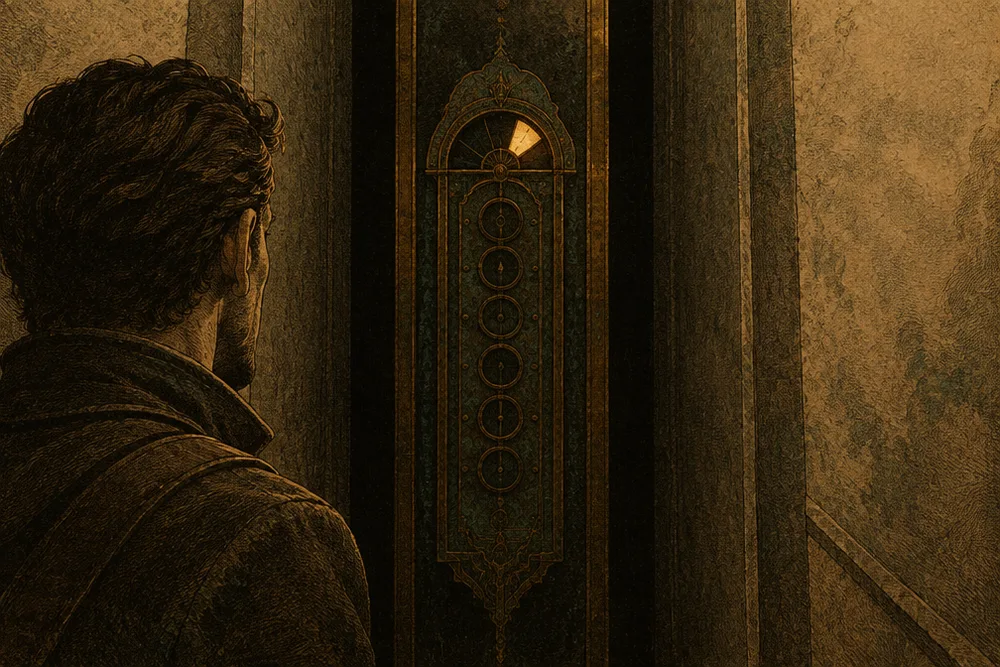
Vale arrived with his technicians and listened as Iona described the draw. He did not deny the sequence. He asked for the exact time, the meter readings, the lift’s rated starting load, and the names of everyone who had witnessed the interruption. A system someone could be held accountable for, he had said. Iona understood why he asked. She also saw the woman who had been trapped gripping an attendant’s sleeve.
Orr turned from the commissioner to the people gathered around the station. “How many of you use this lift every day?”
Hands rose. More than a dozen. A few people lifted both hands, then lowered one to steady a cane or hold a child. Orr watched each of them, taking in the list as if counting names for a roll call.
“We need to meet,” he said. “Not to ask for an exception. If the grid is going to divide what it has, we need to say what cannot be divided away.”
A lift attendant nodded. One of the tenants asked when. Orr named the assembly room behind the old bakery, after the morning shift. People began to offer chairs, lamps, a slate for recording cases.
Iona felt a small, unwelcome relief. Her father was not merely waiting to be served; he was already gathering the people the system had treated as separate emergencies. Yet a meeting could not hold a lift in motion. She looked at the empty indicator and knew the next surge might come before they had words for it.