When the Streetlights Grew Leaves
Page 10 of 207
Chapters
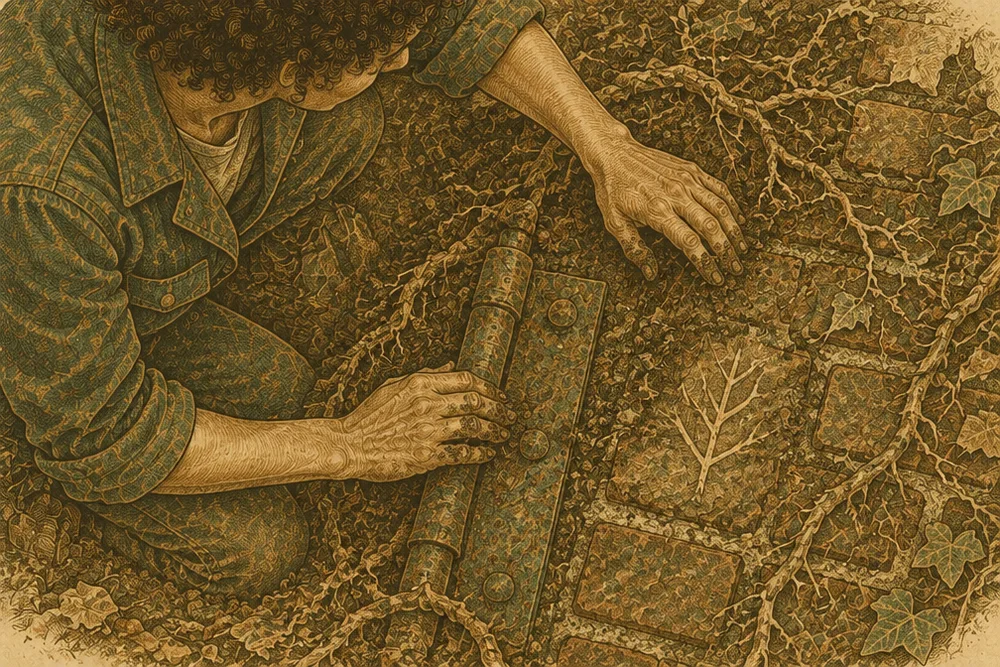
She set her meter against the feeder and waited for the needle to settle. It trembled, stopped, then tilted toward the buried paving.
A current map would have made the street look like a comb: one municipal line feeding a row of lamps, each lamp metered against the same porcelain forecast. Iona worked down the circuit, testing each fixture in turn. The neighbors were sound. Their cores sat at the expected temperature, and their little glass windows showed steady amber charge. The leafing lamp’s extra draw had not come from them—or at least not directly. The meter kept pointing beneath the pavement.
At the next junction she found a shallow dip in the paving, patched with darker stone. The patch was older than the lamp, older than the newest feeder line. A pale seam of mortar traced a rectangle beneath the tar. Iona brushed grit from it with the back of her glove.
Mera came to stand beside her. “That repair isn’t on the current map.”
“The map’s been revised three times.”
“So have the pipes. You don’t open a street without a permit.”
Iona looked down the slope. The street climbed toward the workshop district, where the municipal crews kept their cable reels and porcelain stock. A permit would take days. Vale’s office could order the lamp cut before then. Yesterday, the commissioner had not yet set a deadline; now the word deadline seemed to inhabit every pause in Mera’s voice.
“If the feeder crosses under there, I need to know where it goes.”
“You can test from the service hatch.”
“There isn’t one.”
“Then you request one.”
The meter needle quivered against the buried seam. Iona remembered the lamp’s voice: not a noise in the wire, but a sentence formed in a familiar cadence. Nell had vanished six years ago, during Reedbank’s blackout. Iona had been a girl then. She remembered only the city notices, the flooded lower streets, and the name printed beneath a small portrait. The voice at the lamp had been unmistakable, though. It had told her to look for the garden gate under the patched footway.
She had not told Mera that the voice had used the word please.
“I’m going to Reedbank,” Iona said.
Mera’s eyes narrowed. “Why?”
“The lamp named a garden gate. The old feeder may run toward the low bank.”
“You think a dead woman’s voice is a map?”
“I think the current has a route. I can follow it.”