Two Tickets for the Unfinished Supper
Page 8 of 163
Chapters
Before locking up, she took the ledger down to the cellar once more. She found the invoices filed by month, but there were gaps. Several bills showed a balance, then a later payment against the account without a matching receipt. The amounts were too regular to be accidental and too small to explain the whole operation. She copied them onto a sheet and left a blank column for the name of whoever had paid.
It would have been easier to sell without knowing. Easier to tell herself the café had been one more thing her aunt had asked her to carry, and that her own life was waiting two stations away. Yet the erased line in the ledger kept drawing her eye. The supper money had not vanished. It had been put to use, somehow, while the promise remained.
She locked the cellar, checked the back door, then returned to the counter to put the booking book in a dry drawer. The brass key clicked in the lock with a sound that seemed louder after closing. She stood alone in the warm square of the café’s kitchen light and tried to imagine forty-eight people eating there. The room could fit them only if they took turns or borrowed chairs from the concourse. The actual supper might have to happen somewhere else.
There was the station annex, she remembered, the training kitchen off the covered platform. Her aunt had once mentioned it when the café’s oven failed, but the annex belonged to the railway and access depended on the station manager. Tamsin did not know whether it could be used for a public meal. She wrote the thought down, then underlined it once.
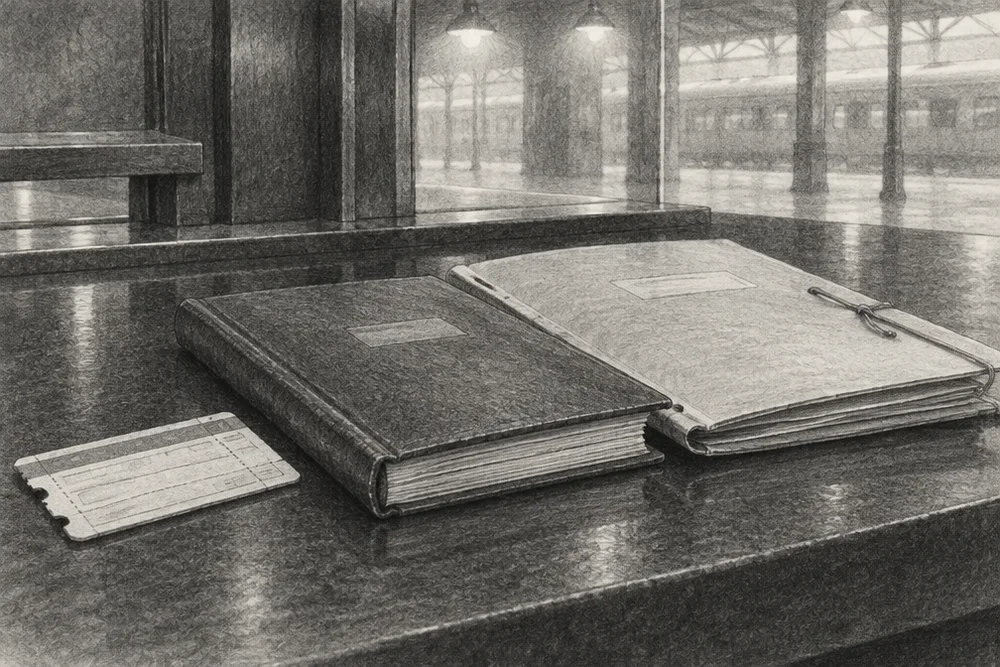
On the counter, Piers’s offer waited in a clean folder. Tamsin laid her own notes beside it: forty-eight names, the old invoices, her rough list of stock. The offer would cover the residency deposit. It might also cover the costs of the supper, if the equipment stayed put until Saturday. She would have to ask for that. The handover, if there was one, would have to come after the meal.
She did not yet know whether the sale could work on those terms. She did know she would not sell the ovens before she had fed the people who had paid for dinner.
When she turned off the kitchen light, her reflection disappeared from the steel. She carried the Saturday ticket upstairs with the booking book and put both beside the ledger. The ticket marked a way out. The list marked a promise that had not yet been kept.
By morning, she would have to begin finding out what it cost.