The Week We Borrowed a Kitchen
Page 74 of 172
Chapters
Mina read the exchange without typing. There was nothing she needed to resolve. The first time she had gone to the hall, she had thought that a kitchen was a place to go when her own failed. Now she saw the empty bowl beside the lentils and the warm room around her, and understood that she could stay here if she wanted. The key in her pocket was not a summons.
She put on her coat anyway. Before leaving, she looked once at the two chairs and the pale marks on the floor. Tomorrow Kit would take the pair. The table would remain, for a while, without an answer. Mina locked the flat and went down the stairs.
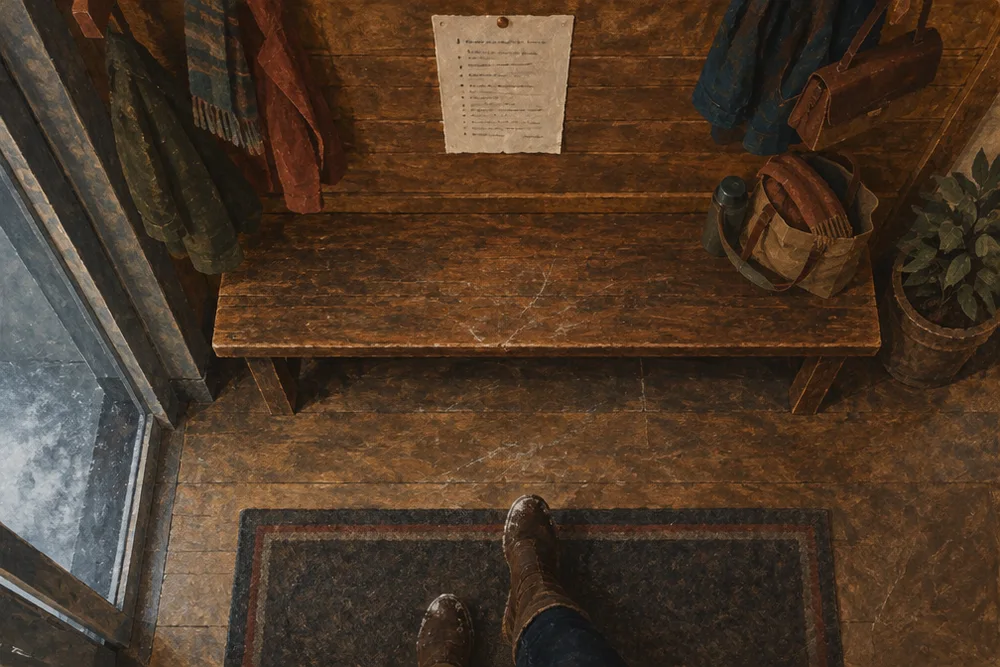
Outside, the air had a damp metallic bite. The bus went by with its windows bright against the early dark, and Mina walked toward Alder Hall instead of waiting for it. The hall stood on the next block, its accessible door facing the street beneath a shallow canopy. A strip of blue-gray light showed through the narrow glass. She took the borrowed key out of her pocket but did not use it; the door opened from inside as someone left carrying a paper sack.
The person held the door for her. Mina stepped into the foyer and heard the dull hum of the refrigerator through the kitchen entrance. The noticeboard was crowded with flyers, a lost scarf note, and a sheet of paper listing the pickup window. The sheet had been printed large enough to read from the sheltered bench. At the bottom, in Rafi’s compact handwriting, were the words: If the supper is canceled, this notice will be marked here.
She stopped long enough to read it twice. The foyer smelled of wet coats and the faint sweetness of something baking. She could see the kitchen from the entrance: the fridge, the deep central table, and a line of amber light spilling from the ovens. Rafi stood near the counter in his cream rugby shirt, sleeves pushed up, checking a row of containers. He looked up when she came in.
“You’re early,” he said.
“I have the first cleanup stretch.”
“That’s later.” He tapped the label on one container, then another. “Right now I’m trying to keep the pickup line from becoming a conversation about who’s allowed to take what.”
Mina glanced at the labels. Each had the food name and the time it could be collected, with a note about reheating. None asked who the person was or why they needed it. “Do you want me to put the sign in the foyer?”