The Week We Borrowed a Kitchen
Page 29 of 172
Chapters
He returned to the foyer. Mina heard the noticeboard’s cork give a faint squeak as he pinned something up, then his steps moved away. She went to look. The rota still listed Tuesday as hers, and beside it, in Rafi’s compact handwriting, a slip of paper read: PICKUP? Ask host. There was no name and no request for more. He had offered a question, not a complaint. Mina found a marker in the ledge beneath the board. She could write a pickup time there, put a number beside it, or make a simple sign that said food available. If she did, people might turn up. The thought was both the point and the problem. She wanted a meal she could eat without performing for anyone; she had not wanted to provide a service. The kitchen’s window showed the sidewalk and a row of parked bicycles, the street beyond narrowing toward the bus stop. A woman passed with a paper shopping bag hugged to her coat. Nobody looked toward Alder Hall.
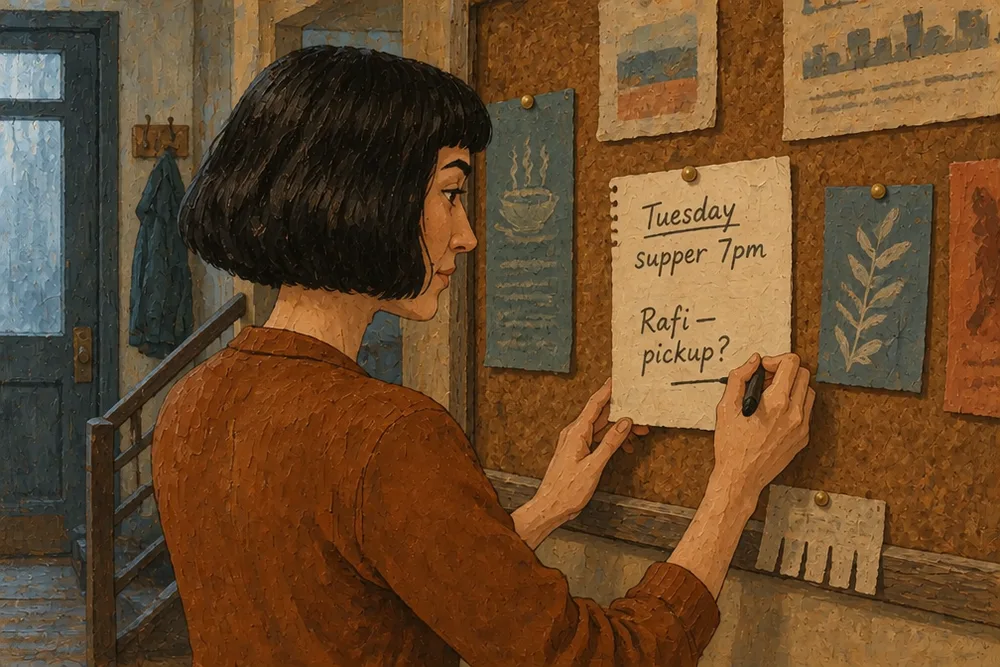
Mina uncapped the marker. “Tuesday, seven,” she wrote, then stopped. A time without any further information looked like a gathering. A gathering suggested places to sit, and places to sit suggested a number. She added: supper. The words made her stomach tighten. She considered crossing them out, but Rafi might already have told someone to come. The noticeboard was shared, and the whole arrangement had begun because people did not each have their own private version of the kitchen. She added a line beneath: bring a container if picking up. It was not a full answer, but it gave the invitation an edge. For a moment she stood still, marker poised above the board, wondering whether she ought to add a phone number or a way to ask questions. She didn’t. The kitchen key did not belong to her, nor did the hall’s noticeboard. She was borrowing both, and borrowing, she was learning, was a matter of accepting that someone else might use the same space in a way she had not anticipated.