The Week We Borrowed a Kitchen
Page 26 of 172
Chapters
Kit left without asking about the meal. Mina watched the coat disappear beyond the door, then felt the draft die against her cheek. She remained standing beside the table. The grocery bag had folded inward where she had set it down, and the carrot tops poked through its handles. Her first thought was to go after Kit and tell the truth. The next was that she had no good place to say it: not this public kitchen, not the cold flat where the chairs were no longer, and not by message, where the lie would appear cleanly on a screen. She lifted her phone. The message thread showed Kit’s last note about the moving van and Mina’s reply, a thumbs-up sent from work. Under it, an old photo showed the six chairs around the oak table. She closed the thread and set the phone away. Her shoulders had drawn up toward her ears. She rolled them down, as if the room had asked her to do it.
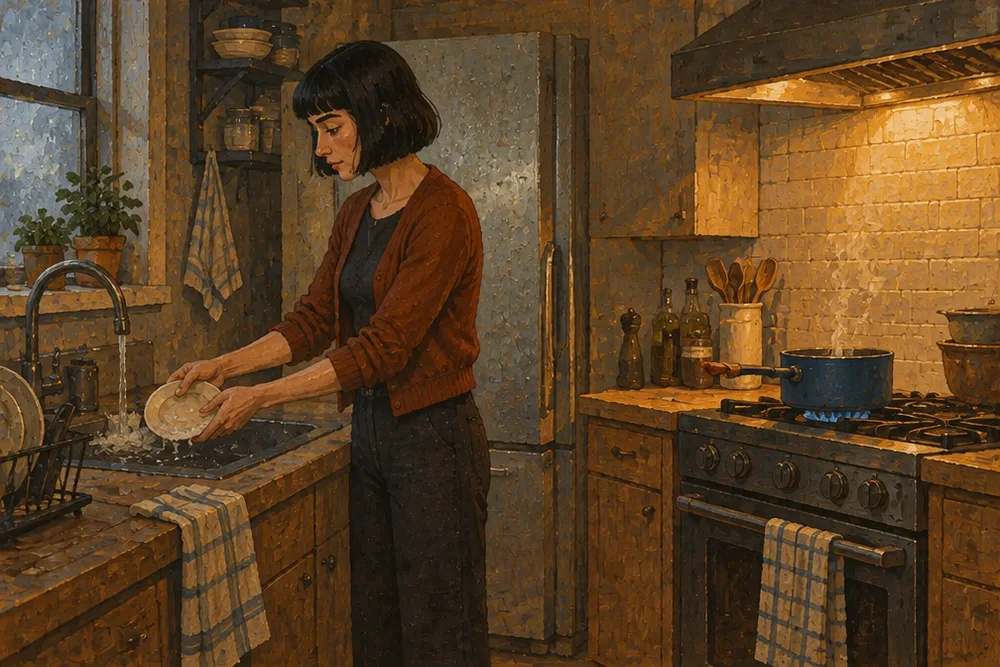
Mina washed her hands at the sink, working soap into the creases around her nails. The water ran cold for several seconds before it warmed. She turned the tap down, waited, then shut it off and dried her hands on a paper towel. The small preparations were a relief: steps with a clear end, no hidden meaning. She put the lentils in a bowl and picked through them for grit. Then she measured water in a jug, poured it into the saucepan, and set the pan on the stove. If she cooked now, she could finish early, eat, rinse the pot, and leave the hall clean enough that nobody would have to remind her about the rota. She had promised Bea a named closer, but she could not name herself without making the whole evening feel like an admission. She had assumed the person who hosted would naturally close. Bea had not said that; in fact, she had specifically written the instruction. Mina had read it, understood it, and decided the details would sort themselves out.