The Week We Borrowed a Kitchen
Page 164 of 172
Chapters
Rafi glanced up, saw her, and lifted his chin in greeting. No invitation to stay, no request for help. Mina lifted her own hand. Then she stepped outside to wait for her portion like anyone else.
The pickup window moved steadily. A man in a green cap arrived with a reusable bag and left with two cartons. A woman Mina recognized from the bus route read the ingredients, asked Rafi whether the sauce contained peanuts, and waited while he checked the recipe sheet instead of guessing. He found the answer, wrote it on her label, and handed it over. A teenager came without a bag and tucked a carton inside the hood of his sweatshirt. Rafi didn’t ask where he was going or who would eat it.
Mina watched from the foyer, not from the kitchen threshold. The noticeboard had become a place where people could learn what was happening without having to enter a room full of people already eating. The bench was clear. The accessible doorway stayed open, its passage unobstructed. When one person lingered to ask whether the next pickup night would be seated, Rafi pointed to the schedule rather than explaining the whole system. Tuesday, alternating format; check here by noon. The visitor nodded and left with the information.
Once, a woman held a carton in both hands and studied the writing. “This is yours?” she asked Rafi.
“It’s for pickup,” he said. “Take whichever label fits.”
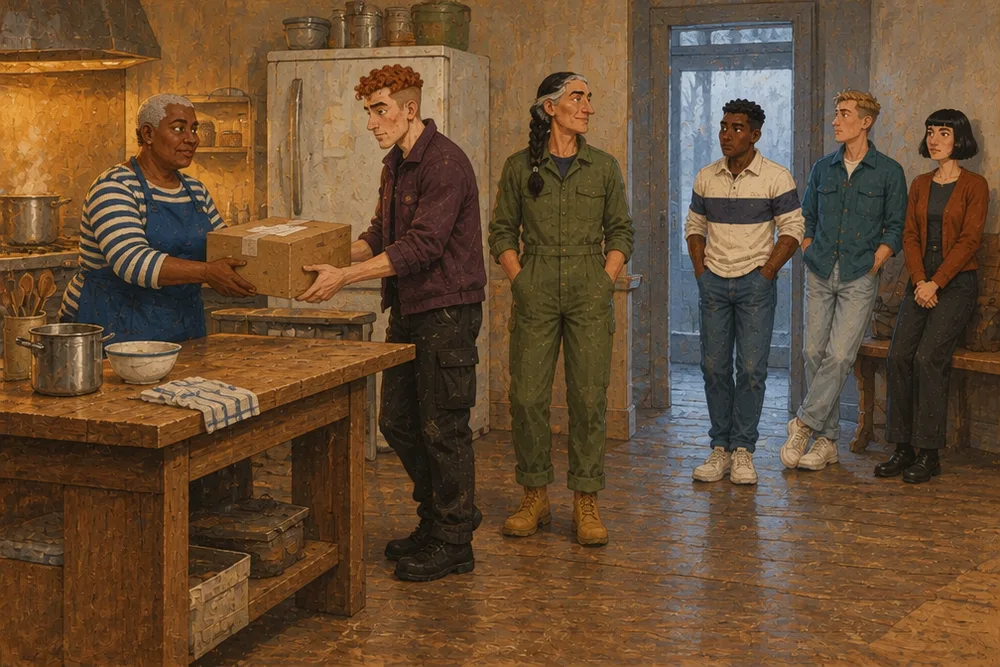
She chose a container marked lentil stew, two portions, dairy-free, and put it into her bag. Her shoulders softened as she turned toward the door. Mina understood the smallness of the exchange and the labor inside it: the label could tell someone what the food was without asking them to explain their household, their appetite, or why they could not sit down. Rafi had built those details into the supper as carefully as he built them into the recipe.
When Mina reached the worktable, she waited until the woman had gone. “One portion, please,” she said.
Rafi checked the rows. His close dark coils were neat at the sides, and the notch in his left eyebrow lifted when he found her name. He handed her a carton with Mina written across the lid, followed by the ingredients and a simple instruction: warm slowly; add a spoonful of water. The food showed orange through the translucent plastic. It was a portion for one, not a promise of seconds or an invitation to stay.
“You’ve got a good system,” Mina said.