The Week We Borrowed a Kitchen
Page 119 of 172
Chapters
Mina could hear the rule settling into place. It had edges. She had spent the week treating edges as something to soften, as if every boundary were a refusal. But Bea’s terms left room for the kitchen to be used without making Bea responsible for its unplanned hours, and room for Mina to take part without becoming its permanent keeper.
“I’ll take a scheduled loan for the evening I host,” Mina said. “Not beyond it.”
Bea nodded once. “Good.”
Della pushed the tin of spoons toward the middle. “I’ll cook one of the seated nights. Not this coming week. We can see how the first one goes.”
“That’s a commitment,” Mina said, then caught herself. “Only if you want it written down.”
Della gave a small shrug. “Write it as a possibility. Don’t put my name in the permanent column.” There was no permanent column, but Mina understood. She wrote Della’s name beneath the heading marked PROPOSED, then put a question mark after it.
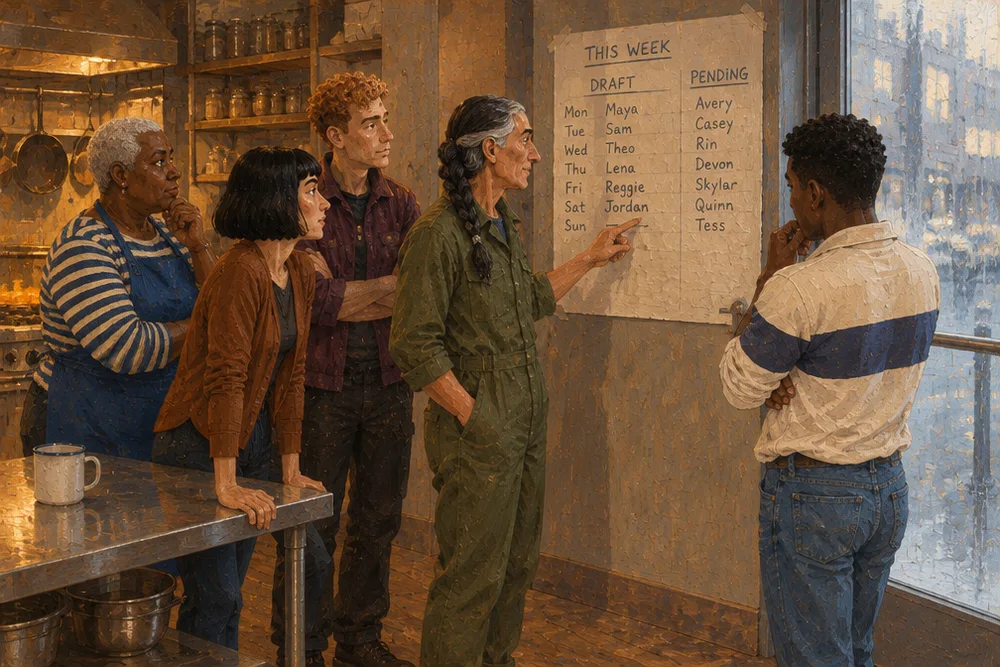
They made the plan in smaller pieces. One weekly session, at a time and within the hall’s existing hours. A host confirmed the format and the food. A separate closer agreed to stay through the checklist, wipe the worktable, check the fridge dates, and make sure the doors were locked. Bea would keep the record of key loans. Mina would maintain the notice, but the foyer board—not a conversation in the kitchen—would say whether the session was happening.
If a host or closer withdrew before the posting deadline, the evening would be canceled. If the withdrawal came after food had been bought, the host would decide what to do with it; the hall would not expect Bea to find a replacement or Mina to invent one. Pickup-only sessions would list a clear window and identify each portion by its contents and time, not by a guessed name. Seated nights could set places, but chairs could not obstruct the street door.
“That’s a lot of rules for one meal,” Della said.
“It’s less than having to explain everything every time,” Bea replied.
Mina copied the terms onto the back of an old notice, then read them aloud. She disliked how official they sounded. Still, the lines did not require anyone to be generous on demand. They did not ask Della to feed the memory of a family that had moved. They did not ask Oren to leave unlabeled cartons and trust strangers to understand them. They did not ask Rafi to turn his household into an explanation before he could take food home.
“I can do the first week,” Oren said, “if my shift comes through. I’ll know by Tuesday.”