The Unofficial Anthem of Locker 207
Page 149 of 164
Chapters
Malik opened the notebook. “The latch is the first sound in the current sequence. People recognize it. We wanted to ask if we can keep it when we take over.”
Dani looked at the headphones. The latch catch was hers: the one-second recording she had made on Monday, back when she was trying to prove to herself that a small thing could be heard. She had left the recorder in 207 and invited an answer. The sound had become the first beat in a song she had not known how to share.
“Do you mean keep it in the playback sequence for now,” she asked, “or keep it permanently?”
Tess and Malik exchanged a glance. “We were thinking it could be the station sound,” Tess said. “Like the way the latch opens the whole thing.”
“I like the idea,” Dani said. She heard how quickly the answer arrived. She made herself stop before it became a yes. “But I don’t give permanent permission. You can use it in the next version. I can say yes to playback, and I can say no later. Same as anyone else.”
Malik’s thumb stopped twisting the wire. “That makes sense. We can put an expiration date on each permission, or check again each semester.”
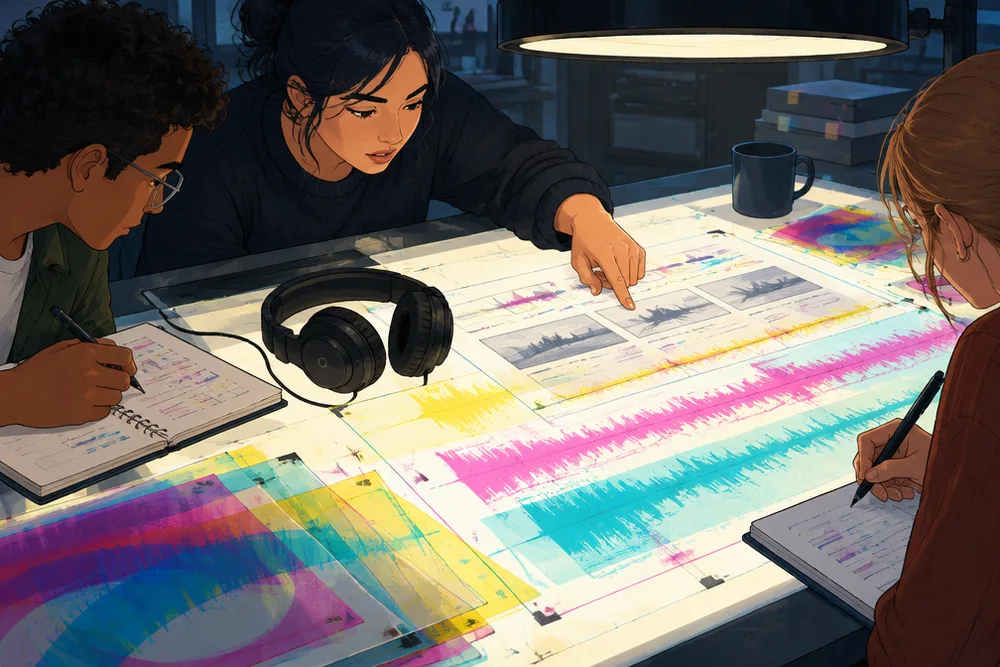
“Not just ask once at the beginning,” Mina said. “A person might change their mind before the semester ends.”
“We can add a review box,” Tess said, writing it down. “And a way to pause the sequence if someone asks for a withdrawal while a session is happening.”
Dani nodded. “That’s good. I’m not asking you to protect the sound from changing. I’m asking you not to decide it belongs to the station because it was there first.”
Marr watched them work through the language. Her face was difficult to read, but she did not interrupt. The station’s success, Dani realized, would be measured partly by how little it needed her to explain. Tess wrote a second line under the first: Permission is revocable. Check before renewal.
The meeting moved from principle to the tedious parts that made principle real. The library would store only the approved playback copy, not the private recordings. Contributors could ask for private return or deletion. The rota would record who had reset the station, but not who had listened. A withdrawal would be handled by the editor on duty, with a second editor checking the change when available. If only one editor was present, playback would pause until another could review it.
“What if a file is part of a sequence and removing it leaves a hole?” Malik asked.