The Tide Takes a Name
Page 70 of 169
Chapters
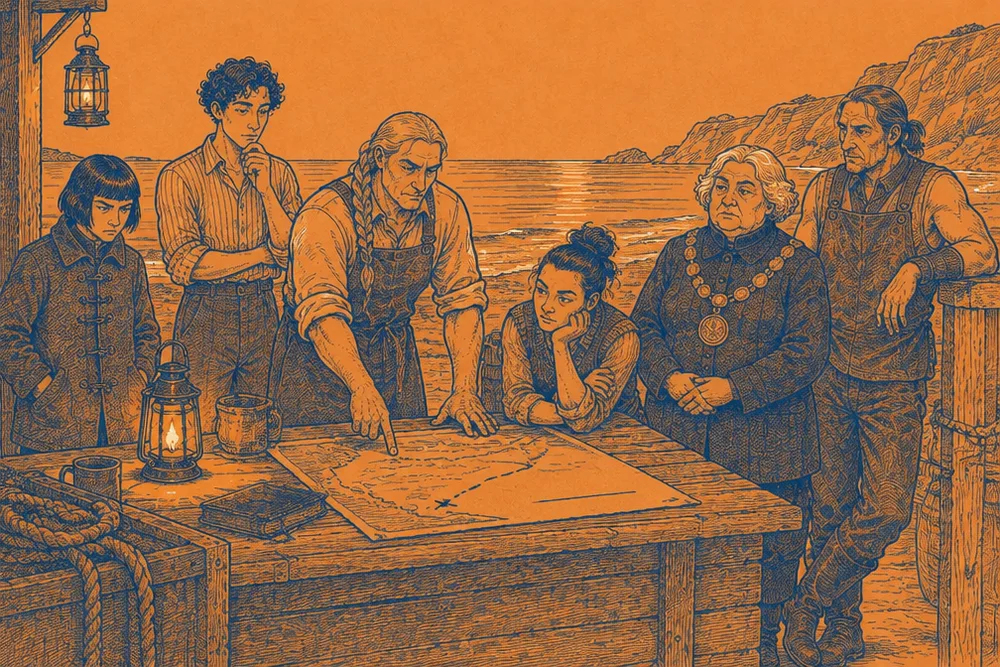
“And whether a cart can turn here,” Greta said. The shelf seemed wide enough to her, but she had learned the danger of deciding that a place was usable because it looked so from standing still.
Nell tapped one of the iron rings. “My grandfather used these for nets. They’re still set deep.”
“That tells us they’re set deep,” Greta said. “Not that they’ll hold a ramp.” Nell’s expression tightened, then eased. Greta had not meant to dismiss her. She did not soften the fact, either.
Quill measured the shelf with his stride, heel to toe, then turned and measured it again. Greta watched the waterline below it. A wet band marked the stones at knee height; another, higher and darker, showed where the spring tide had reached last month. The location did seem above the lowest reach, but the ground still narrowed at the turn toward the steps.
“We can get a cart here from the street,” Nell said. “The lane comes around behind the shed.”
“How long?” Quill asked.
“I don’t know.”
“That’s what we need,” Greta said. “Not a number we make up because we want the answer.”
Nell’s long fingers curled against the ring. “I know what the road is like. I’ve carried things through it.”
“Then you know which parts catch a wheel,” Greta said. “We need the ferry approach timed too.”
The three of them stood in the cooling air, looking at the shelf as if it might reveal its limits to patience alone. Beyond the wall, a gull dropped onto a piling, shook water from its wings, and lifted off again. The ferry’s ramp would have to meet this stone at the right angle. A loaded cart would have to turn without striking the wall. The boat would need enough depth beneath it, and enough time to load before the tide altered the approach.
When they walked back toward the quay, Nell asked Greta, “Did you get an answer from your mother?”
Greta’s feet slowed. She could have pretended not to understand, but Nell’s eyes were steady. “Not yet.”
“You sent your letter?”
“Yes.” She had written the question carefully, then crossed out the careful version and asked the plain one: What did you see when the court said the landing was safe? She had not asked Mara to come home. She had not asked for forgiveness. She was still waiting to learn whether even the question had been too much.