The Tide Takes a Name
Page 50 of 169
Chapters
Greta copied the dates onto a clean sheet, leaving room beside each for the order number. Quill read from the index while she found the matching entries. The work settled into a rhythm: page, reference, date; page, reference, date. Outside, a cart rattled past the town hall. Somewhere in the quay, a gull gave a harsh, solitary cry.
“Session forty-two,” Quill said. “The landing closure.”
“That’s not the first one.” She slid the order toward him. “Read the finding at the bottom.”
He leaned closer. “‘The old landing may be treated as serviceable for ordinary ferry use, provided the uphill road remains open to loaded traffic.’” He frowned. “That’s the same wording as the current route map.”
“Nearly the same. The map says the road is a reliable substitute for the landing.” Greta tapped the earlier sentence. “This is what they rely on.”
“But it says ordinary ferry use.”
“And provided the road remains open.”
Quill glanced toward the window, as if he might see the steep road from here. It climbed from Nell’s street in a narrow bend, surfaced with cobbles that held slick green along their seams. At spring tide, carts could not take it loaded; everyone in the lower quarter knew that. The map did not show the slickness, the slope, or the hours when the water covered the low approach. It showed a clean line where a working landing used to be.
Greta turned back to the index. One cross-reference pointed from the closure order to a separate petition about the old landing’s safety. The petition had been heard two winters ago. Its date fell three weeks after her mother’s case.
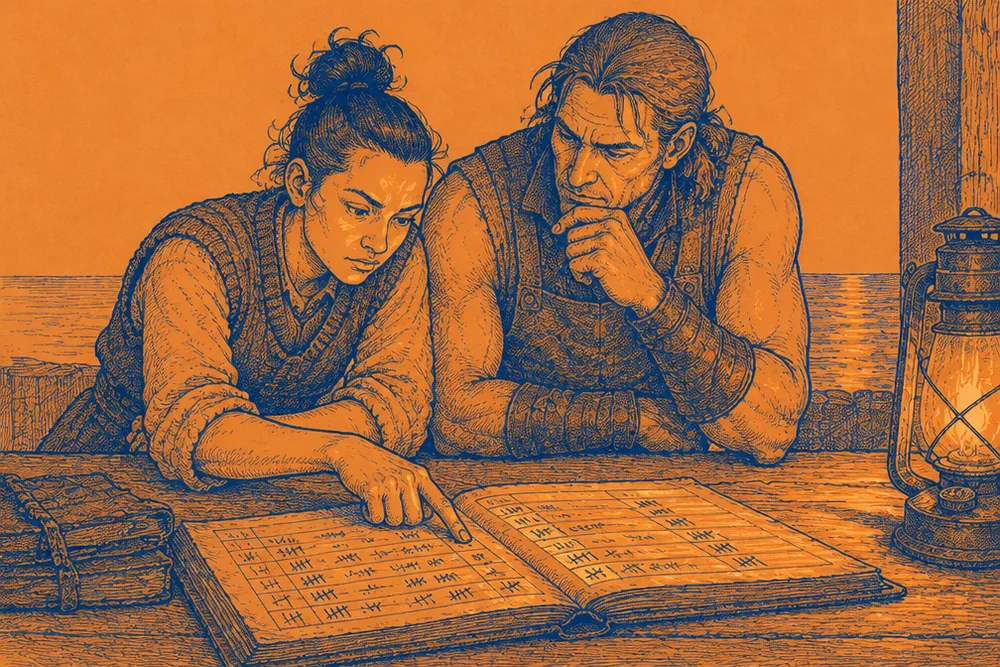
She stopped with her hand on the next page.
Quill noticed. “What?”
“Mara’s order.”
His expression tightened but did not close. “You knew it was in here.”
“I knew the order existed. I didn’t know the closure used its finding.” She reread the line, slow enough to feel the cramped clerk’s writing catch at her eye. “They said the landing was safe when they refused her return. Then they used that same claim to say there was no need to keep it open.”
“That doesn’t prove one caused the other.”
“No.” Greta kept her finger on the cross-reference. “It proves they’re connected in the record.”
A damp chill seemed to rise through the table. The town hall’s basement sat below them, hidden at low tide and filled by the inlet when the water climbed. The hearing chamber above it had been built for voices to carry. Greta had learned that some names carried whether anyone wanted them to or not.