The Tide Takes a Name
Page 155 of 169
Chapters
“Keep your fingers clear,” Ivo called.
“They are clear,” Greta said.
“They’re near enough to be clear only if you keep them there.”
Quill tightened the bolt. Greta felt the wood shudder under her palm. A line of water slipped through the gap and shone on the board. They fitted the next section, checked the hinge, then tried the ramp’s rise against the tide mark.
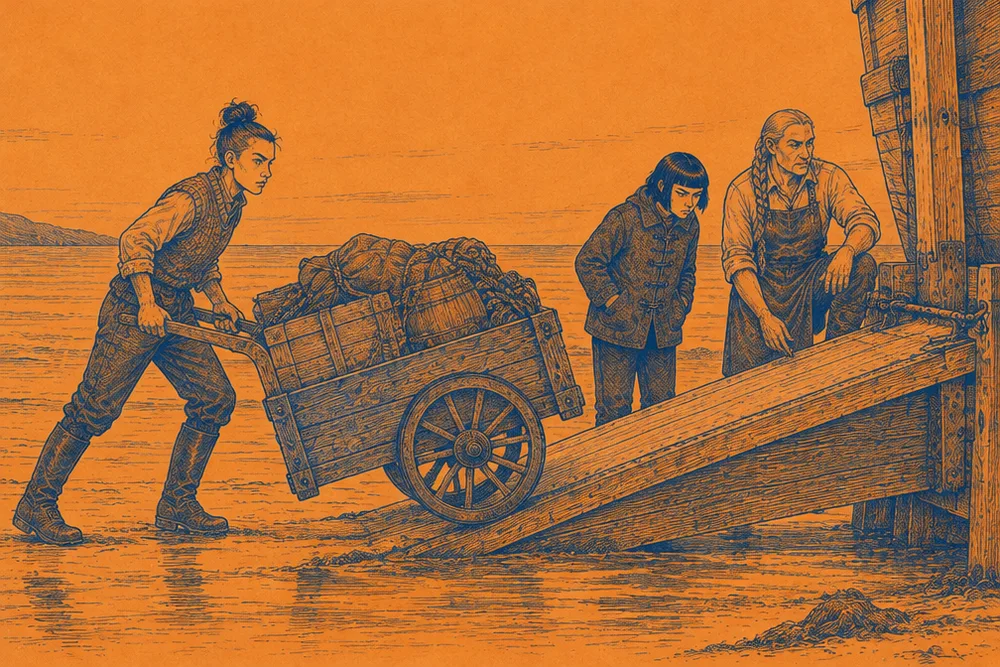
Nell arrived with a handcart loaded with sacks. “Test it,” she said. “Not with empty air.”
Ivo studied the cart. “Those sacks aren’t secured.”
“They’re secured enough for a short push.”
“If they spill, we stop.”
“Agreed.”
Nell loaded the cart onto the ramp. Its wheels clicked over the joins. Greta and Quill watched the hinges as Ivo raised the shore end by one notch. The cart stayed level. Nell pushed it down, turned at the street end, and came back up without taking the uphill road.
“It moves,” she said. “Now make sure it keeps moving when the tide is higher.”
“That’s the next check,” Ivo answered.
Greta looked at the new landing as if it were already a route on a map. Not finished, not proven under every tide, but there in boards and iron, made by hands that could still find a flaw before a seal hid it. She thought of the posted roll and the column where Nell’s no remained beside the decision that had outvoted it.
Quill wiped the wrench on his trousers. “We’ll have to record that test.”
“With the time and tide,” Greta said.
“And who was there.”
Nell leaned on the cart handle. “And what failed, if anything.”
“Nothing failed,” Quill said.
“Today,” Nell replied. “Write today.”
They recorded the test on the back of Ivo’s schedule. The time, the tide stage, the load, the names of the people present. Quill wrote the figures while Greta read them back, and Nell corrected the weight of the sacks by estimating each one separately. Ivo added that the ramp had passed a preliminary test but still required a high-water check.
“Preliminary,” Nell repeated. “Good. That’s what it is.”
The word made Greta think of the court’s old records, where findings had been turned into facts by being copied often enough. A preliminary test had room for another test. A posted roll left room for a person to see what had been counted. The habits were small, and they could still be abandoned. But they existed now in ink anyone could inspect.