The Tide Takes a Name
Page 152 of 169
Chapters
Nell crouched to inspect the chalk, fingers long and pale against the dark grit. “And when the spring water comes over this edge?”
“The ramp rises with it,” Ivo said. “If the hinges don’t bind.”
“If they do?”
“We clear them.”
“That isn’t a plan.”
Ivo’s mouth tightened. He looked at Greta rather than at Nell. “That’s why the fitting crew is paid by shift.”
Quill unrolled the drawing on top of a crate and held its corners down with two stones. The proposed schedule was marked in his small, exact hand. He had written the lost market crossing in the margin and set its fare estimate beside it. He had kept his condition from the hearing: the cost of the revised route would not be hidden just because the alternative worked.
Greta held the measuring chain while Ivo and Nell checked the distance from the track to the waterline. The links were cold enough to sting her fingers. They measured twice, marked the ground, and measured again. The new stop would take longer to approach than the old one, but it did not ask carts to use a road that flooded at the wrong hour.
“It will do,” Nell said at last. “If the ramp does.”
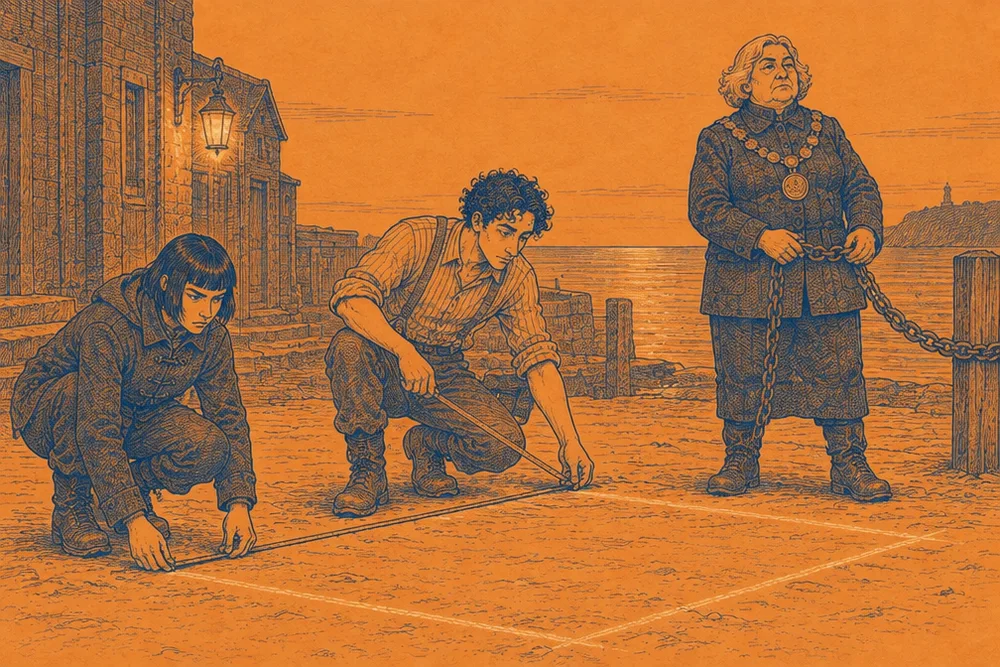
“We’ll know once we fit it,” Ivo said.
“Then don’t call it finished before then.”
He gave a short nod. There was no apology in it, but no dismissal either.
A cart came rattling down the street, its wheels empty. The driver slowed to look at the chalk, then pulled off toward the market. Greta watched the wheels follow the usable ground. The route had not been made right by a vote alone. It needed boards, hinges, labor, and people willing to say when the work had not yet been done.
Quill tapped his pencil against the schedule. “We’ll need another pair of hands.”
“We’ll need the whole shift,” Ivo said.
Nell stood and brushed grit from her knees. “Then put that in the tally, too.”
The work notice went up beside the vote roll. Two paid ramp shifts, one for the morning tide and one for the afternoon fitting. Greta read the hourly rate twice. It was less than the trainee wage would have been, and it came without a promise of regular work after the landing opened. Still, it was money she could count, and the mainland was a place she could reach if she saved it.
Quill signed first. He wrote his name in the narrow space as if the paper might object to a careless letter. Greta signed beneath him. The clerk from the ferry office checked both entries, then handed them each a stub bearing the day and shift.