The Tide Takes a Name
Page 131 of 169
Chapters
The name seemed to gather in the room, then settle. Greta continued. “Fourth day of early spring. Lysa Fen.”
A pause. The name was not Mara’s, but the space after it felt as if it had been left for her. Greta heard the inlet through the floor: the low shifting scrape of tidewater around the basement stones.
“Fourth day of early spring. Pell Armit.”
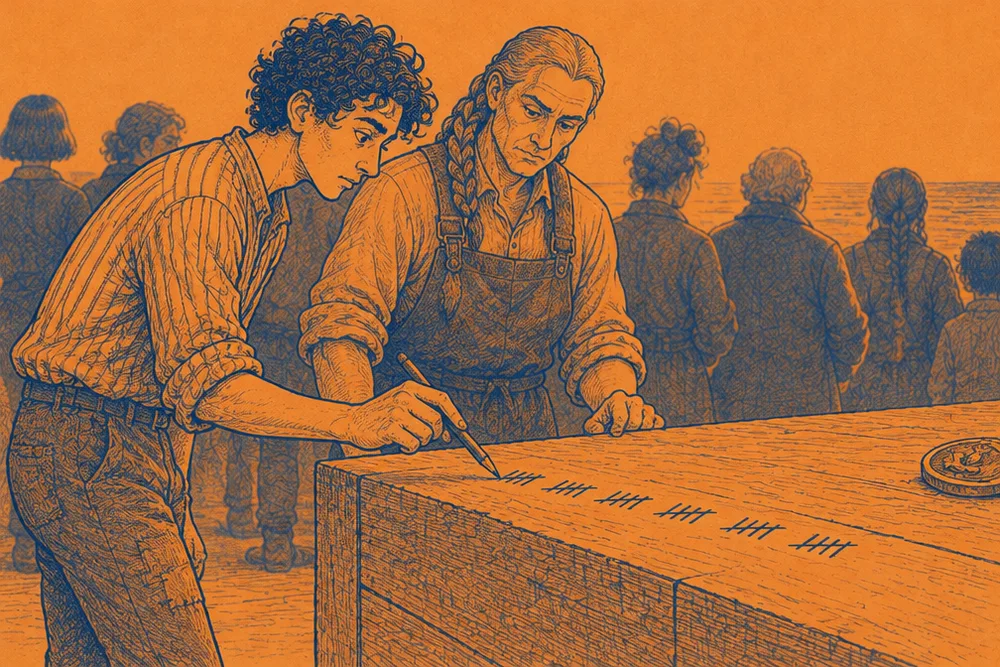
Quill checked the attendance column, then the sheet before him. “Three,” he said. “The attendance total lists three more present than recorded votes.”
“The discrepancy is now nine,” called the clerk, following the page sequence.
“Nine names restored so far,” Quill corrected, without looking away from his marks. “The discrepancy is not a total for the whole roll until we finish.”
His care steadied Greta. He did not bend the numbers to help her. He would count her mistake if she made one. That was what she had asked of him, and what she needed now.
The next bundle of pages carried the dates of the route sessions: the hearing about the uphill road, the closure order, the later review that had treated the old landing as safe. Greta had matched them in the public index until the pattern stopped looking like coincidence and started looking like a method. Every attendance total had remained intact. Every objection had vanished before the record was sealed.
She lifted the next leaf. Its corner was missing, clipped cleanly away. The names remained legible.
“Nineteenth day of spring. Nessa Crow.”
A girl on the second bench raised two fingers to her mouth, as if catching a word before it escaped. Greta did not know whether the name belonged to her or someone else. It did not matter. The name was on the page.
“Nineteenth day of spring. Elian Thatch.”
A man in a salt-stained coat shifted his weight. “I was there,” he said.
The court chair looked toward him. “You need not identify yourself.”
“I know,” he said. He did not explain why he had spoken.
Greta read the third name. “Nineteenth day of spring. Merey Quist.”
The clerk counted along with Quill. Three lines, three present, no recorded votes. The room’s attention had begun to change. People no longer watched Greta alone. Their eyes moved between the pages, Quill’s marks, the attendance column, and the clerk’s finger. The count had become something they could test for themselves.
Ada stood motionless beside the map. Her argument about the contract remained in the room, heavy and practical. No one could pretend the island did not need the ferry. But the numbers would not go back into the sealed book.