The Tide Skips a Beat
Page 98 of 285
Chapters
After the meeting, Miren wrapped the swallow again and placed it on the shelf above the dry basin. Its old mortar left a faint gray mark on the handkerchief.
The allotment offer had to be accepted by the end of the following day. Miren spent the morning turning over every figure she had, though no new money appeared beneath them. Her savings would cover the promised water allotment or the public recount bond. They would not cover both. The bath proposal, even reduced to one room, depended on the allotment; without it the room remained a cold, dry hall and a building with a condemned heating jacket.
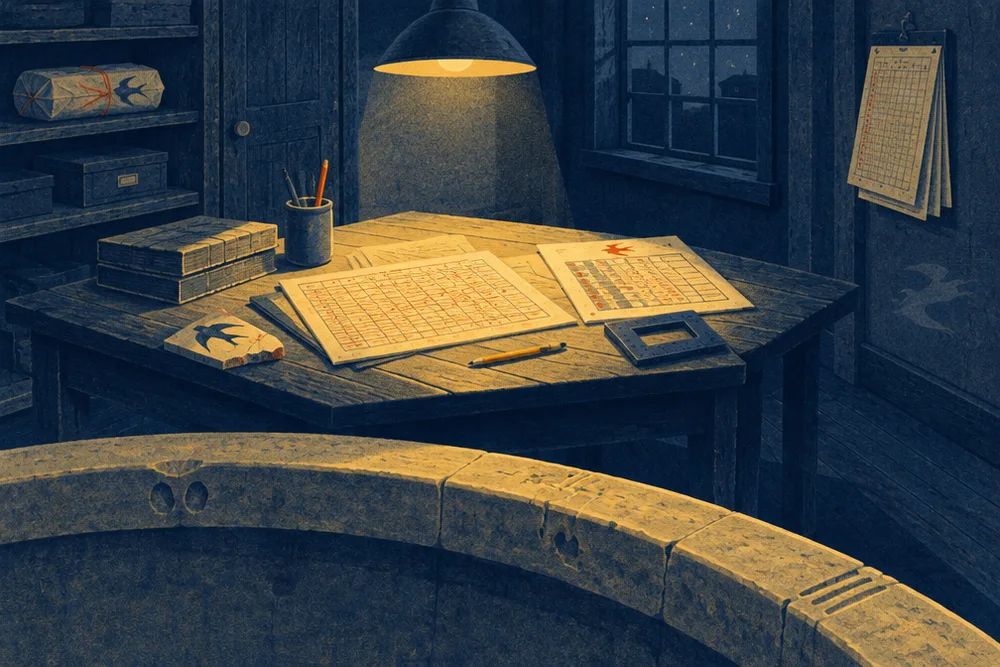
She laid the offer on the table in her mother’s old office. The paper carried the water board’s seal and a line for her signature. Beside it she placed her revised schedule, leaving a blank where she had once written the second-shift closing time. She had hoped a smaller opening would be a compromise. Now she could see that the size of the room did not settle who got to use it, or when.
Pell came by before noon carrying a folded proof from the Dock Bell. “I heard your meeting was lively.”
“It was honest.”
“Those aren’t always the same thing.” He leaned against the doorframe, one inked sleeve band bright against his apron. “Did they like the plan?”
“They liked the idea of a place to wash. They didn’t like the hours.”
“Can you change them?”
“Maybe. Not without changing the sums.”
Pell glanced at the offer. “And that?”
“If I sign, I keep the baths moving toward an opening. If I don’t, the offer lapses.”
“And the recount?”
“I haven’t paid the bond.”
He did not tell her what to choose. The Dock Bell had printed the board’s paid notices alongside the stalled tide report; he knew what the paper earned from the arrangement, and what it would lose if the board withdrew its business. He only said, “Whatever you do, put the cost where people can see it. Otherwise somebody else will tell them you had nothing to lose.”
Miren folded the offer at its crease. “I have plenty to lose.”
“I know.”
After Pell left, she carried the paper downstairs and stood in the front room. The basins were dry; their rims had been scrubbed clean for inspection. She imagined the water coming in, the attendant taking payment, the laundry crews arriving to find the door shut. The room would be alive, but not in the same way it had been alive before.