The Tide Skips a Beat
Page 163 of 285
Chapters
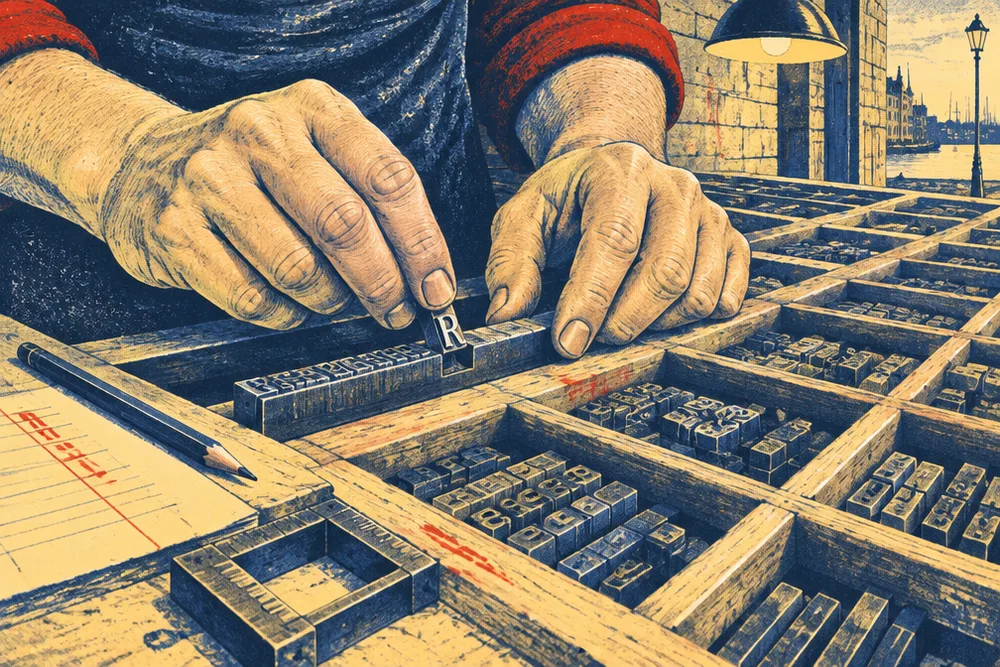
The Dock Bell’s evening run was already being set when Miren reached it. Type cases lined the street-facing wall, their compartments crowded with letters and punctuation. Pell Varodune braced one hip against the composing table, ink-dark apron streaked at the waist. He had a board notice pinned under one palm and a blank column under the other.
“You’re late,” he said.
“The water isn’t.” Miren laid the duplicate findings beside his hand. “One court waived one dusk fill. The reserve reached its mark. The saved volume covered the projected shortfall under the corrected count, if the court guarantees become metered surplus fills.”
Pell scanned the page. “That last condition is doing a lot of work.”
“It should. The board hasn’t secured the permanent change.”
“And the subscribers?”
“Nine funded the trial. The rest want the result first.”
Pell set the board notice aside. “If I print the numbers without the condition, Sella calls it a false report. If I print the condition without the result, the upper terraces call it a guess.”
“Print both.”
“That costs us the board’s notice money.” He tapped the pinned sheet. “They’ve paid for the evening run since before I had this apron.”
“I know.”
“Do you know what that money buys? Paper. Ink. Wages. Not my fine moral reputation.”
“I know.” Miren kept her hands on the table so she would not reach for the page and try to make the choice for him. “You told me you’d print when the evidence could distinguish policy from a lag. Here it is. Print the figures, the terms, and the board’s response. If they withdraw the notices, put that in too.”
Pell leaned over the figures. “I will not have you writing your own account.”
“I’m not asking to.”
“Good. Your name is already in too many columns.” He lifted the page and checked the witness initials. “I’ll give the measurements to the night reader. The board gets room to answer. The paid notice can sit beside the result, but it doesn’t get to replace it.”
He pulled the type tray closer and began sorting letters. “You understand, of course, that the courts will claim they bought the evening, not the truth.”
“They did buy the evening.”
“And the truth?”
Miren looked through the open shop front toward the water-marked street. “They helped pay to measure it.”
Pell gave a brief, tired nod and began composing the headline. Miren watched his fingers place the first letters, then turned away before she could tell him what they should say.