The Tide Skips a Beat
Page 138 of 285
Chapters
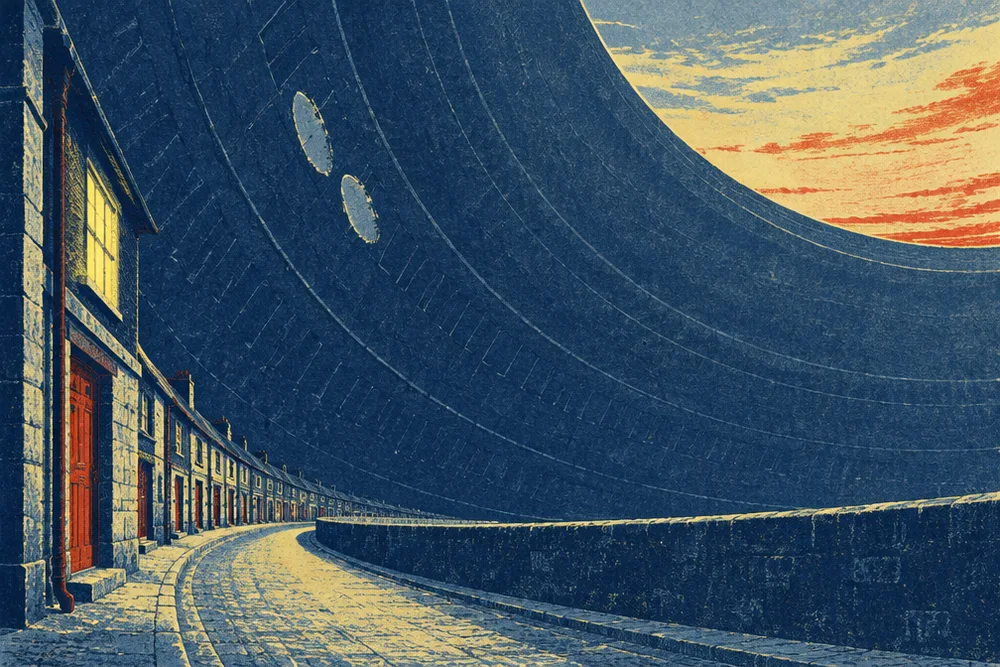
The crew walked back along Needle Row as the last daylight drained from the shell. On the inner curve above them, other neighborhoods hung upside down across the void, their lamps arranged in long, wavering lines. The central dark made the city seem smaller and stranger than it did in daylight.
At the junction, Yarro stopped. “You’ve made the method sound simple. It isn’t. What if two households use one entrance but have separate cisterns?”
“Then we record the entrance and verify each outlet. The route follows the water connection, not just the threshold.”
“And two doors to one cistern?”
“Two thresholds, one outlet. We don’t merge them because the water is shared.”
Yarro gave a tired nod. “That will take time.”
“It took longer to pretend every building had the same shape.”
They turned back toward the converted blocks. In one upstairs window, a tenant held a lamp while another watched from the stair. They had put a strip of cloth over the fresh rib cut so the crew would not mistake it for one of the landlord’s decorative marks. Nivan saw the gesture and understood what it cost: the resident had made a public sign of an entrance the owner preferred to call an empty improvement.
“We’ll have to return for the rubbing,” he said.
“And the witness,” Yarro added.
“If they agree.”
“If they agree,” Yarro repeated.
For a moment Nivan thought of asking the woman in the window whether she knew about his own address. He did not. His move-in, his fresh rib, the halt in the tide: people had already made him the center of a story that was about an entire system of doors. He would not ask them to carry his name as proof when their own lives were the matter.
The residents had begun to understand the crew’s question differently. They did not need to perform a household for the cutters, or furnish a landlord’s label, or split one doorway into a fiction. They had to show the path they used and decide what they would let the record say.
Tomorrow the method would go to Tavi. For now, the crew carried its papers carefully, keeping the public map and the private witnesses separate.