The Tide Comes Through in Color
Page 89 of 268
Chapters
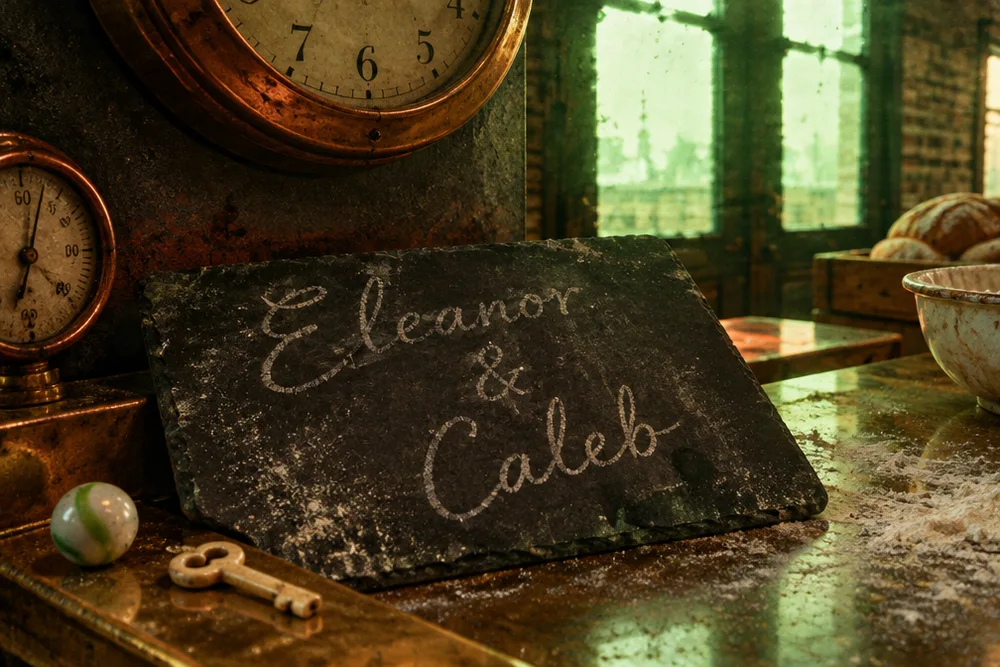
The chalk snapped when Tressa pressed too hard. She sharpened it with the small knife used for scoring loaves, then wrote slowly, making each letter broad enough to be read from across the street. Tressa Jory. The name looked plain and certain. It belonged to the woman who owned the bakery, who knew the hot places in the oven and the safest stair for a child carrying bread. It belonged to the child who had once been dragged from the water. It belonged to the sister who had not been asked what she wanted.
Fen touched the edge of the slate but did not smudge the writing. “You’re going to show her?” “Yes.” “Will you let her talk?” “If she has something to say.” “And if she wants me to come closer?” “You won’t.” Tressa met her daughter’s eyes. “Not today. Not unless we understand what the light does.”
Fen considered this, then pulled a stool close enough to sit without leaving Tressa’s side. “Can I write mine?” “If you want.” “So she knows I’m here.” The words were soft, but not shy. Tressa passed her the chalk. Fen wrote her name beneath her mother’s, starting too large and squeezing the final letters close together. The gap between the names was no wider than a crumb.
Tressa almost told her to leave more room. Instead she let the crowded letters stand. Fen had been born into a life already in motion, among people who had known one another before she arrived and a street that had already lost its outer edge. She had a right to take up space in the message.
“We need to keep back from the screen,” Tressa said. “We are back.” “Farther than that if the image changes.” “If it changes, I’ll go upstairs.” “You’ll tell me first.” “I will.” “And no one else gets to decide I should go out there?” “No one.” Fen looked toward the window, where the light shifted slightly as if someone had moved in the booth. “Not even her?” “Not even her.”
Tressa set the chalk down and took the slate in both hands. The bone clock key hung from a cord at her waist, cool against the rust-red apron. She thought of the clock above the oven, its hands still moving while the picture ran the wrong way. The thought made her jaw tighten. If Quilla was looking at the past, why did the clock keep counting forward? If she was looking at the present, what did the screen consider a boundary?