The Tide Comes Through in Color
Page 20 of 268
Chapters
He could not see the post from here. He could see the gap where the rail had been. Water gleamed in the cracks, gathering where the ground ought to slope toward the sea.
“Count us,” the voice said again.
The brass counter clicked under his thumb. One. The sound was sharp, small, final.
Ninian flinched and let the button rise. He had brought passengers to Wick Row before the landing vanished. He remembered the boat nosing in, the rain on the gunwale, the crowded line stepping from deck to shore. He remembered names and wet sleeves, a child wrapped in something too large, the count carried out loud over the wind. He remembered leaving after the last person climbed the steps. He remembered no one left aboard.
But he had never counted them in the street beyond the landing. He had counted them only as far as the stones. The difference had been enough to haunt him, though he had never said it aloud.
He turned away from the harbor and began climbing. At the top, the Bell’s side passage remained lit. A shadow moved behind the glass of the booth, then vanished. Quilla was there, still working. She would be waiting for the next low tide, whether he came or not.
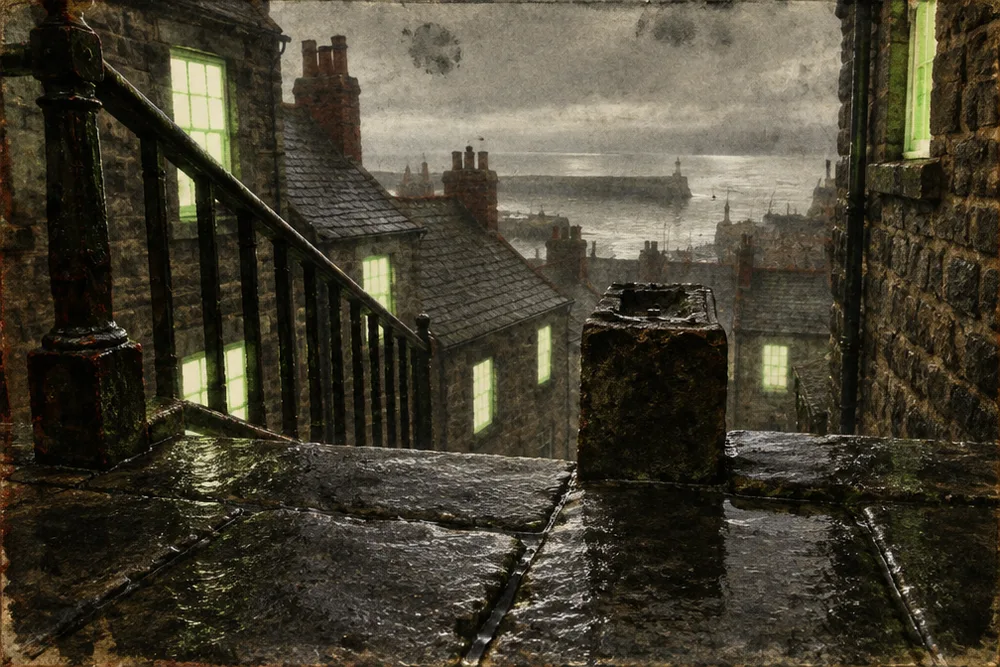
He could take her to the landing. He could show her the rail, the gap, the place where the outer post had stood. He could keep her from putting herself through a picture by making sure the picture had no shore to open onto. If the street was real, then its connection to this town ran through the landing. A ferry had carried people in; a ferryman could close the way they came.
That was what Ninian told himself as he climbed. He did not ask why the voice had said us, not me.
The Bell Picture House’s front doors were locked, but the side entrance had been left on its latch. Ninian pushed it open and entered the corridor behind the auditorium. The smell of damp velvet and old dust met him. From inside the theater came the steady click of the projector, then a soft shift as Quilla adjusted something in the booth.
He stayed in the corridor. Through the narrow door window he could see the stepped rows of seats, their backs dark against the screen. The screen was blank. Its pale cloth held stains that never moved, even when the picture did. A ladder leaned against the wall below it.
Quilla’s voice came down from the booth. “Is someone there?”
Ninian considered leaving without answering. His fingers found the counter again.