The Tide Comes Through in Color
Page 146 of 268
Chapters
“Wait,” Tressa said.
The tenants had gathered behind the counter, keeping their distance. Some watched the window; others watched the floor. The bakery clock ticked again, steady and ordinary. Tressa had spent years believing that if she kept the oven hot, the bread coming, and the stairs swept, the rest of the street could be held together by routine. Now she had to admit that routine could not stop the harbor from finding a new way in.
She checked Fen. The girl stood by the oven, one hand over the pocket with the marble. Tressa moved between her and the window.
“You stay there,” Tressa said.
“I’m staying.”
Orlo shifted the tray in his hands. “If we wait too long, the tide will turn.”
“We don’t hurry because of the tide.”
The words sounded like something her mother might have said. Tressa felt the old ache of wanting to ask her mother what she would do, and then remembered that the answer would not change the floor beneath them. She had to decide with the people who were here.
“All right,” she said. “Bring it to the sill. Not past it.”
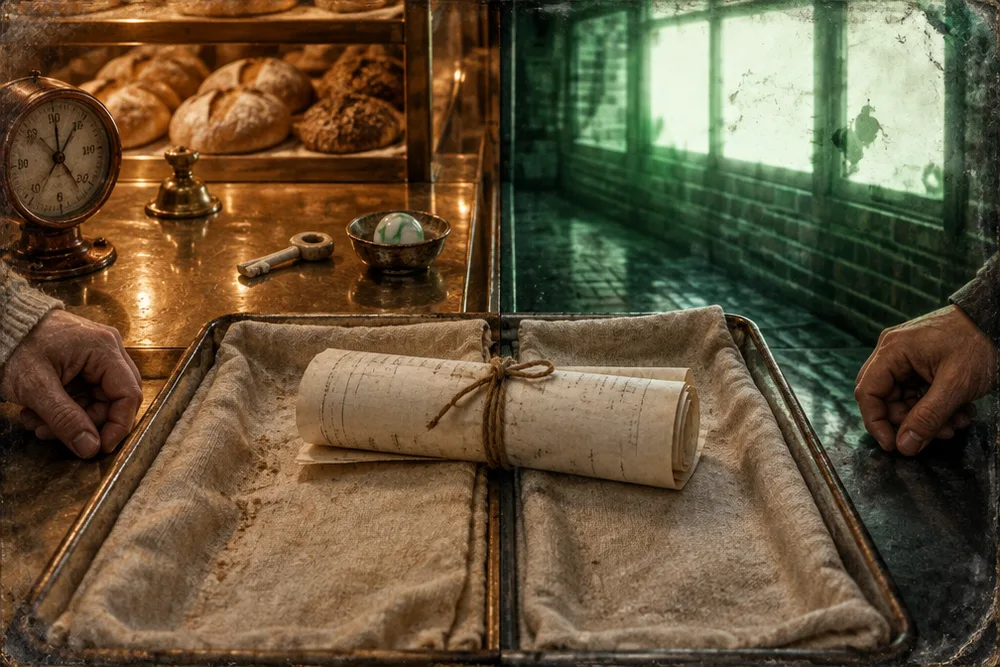
Orlo took one step. The screen brightened across the room. For a moment the bakery window showed the picture house’s stepped seats instead of the harbor. The aisle beyond them was empty, the low screen lip pale as bone.
A thin line appeared across the image, like a seam in a sheet. It ran from the center outward and stopped before the frame. Tressa heard a soft mechanical click, then another. The pressure in her ears changed. The bread tray trembled in Orlo’s hands.
“Don’t move,” Tressa said.
“I’m not moving.”
“Set it down.”
He lowered the tray onto the sill. The image held. On the other side, Quilla leaned forward, then caught herself and stepped back. Ninian watched the frame instead of them. His brass passenger counter glinted at his chest.
The tray’s far edge crossed the seam. The wood gave a small, dry creak. Tressa’s eyes went to the floor. The bakery planks remained in place; the chalk marks did not shift. She watched the line in the image, narrow as a cut, steady as a held breath.
“The roll,” she said.
Orlo untied it and eased the bundle onto the cloth. His hands shook slightly. He slid it forward until half the roll rested beyond the sill, half on their side. The paper did not tear. The tray did not tilt.
“Stop there,” Tressa said.
Orlo stopped.