The Tide Comes Through in Color
Page 110 of 268
Chapters
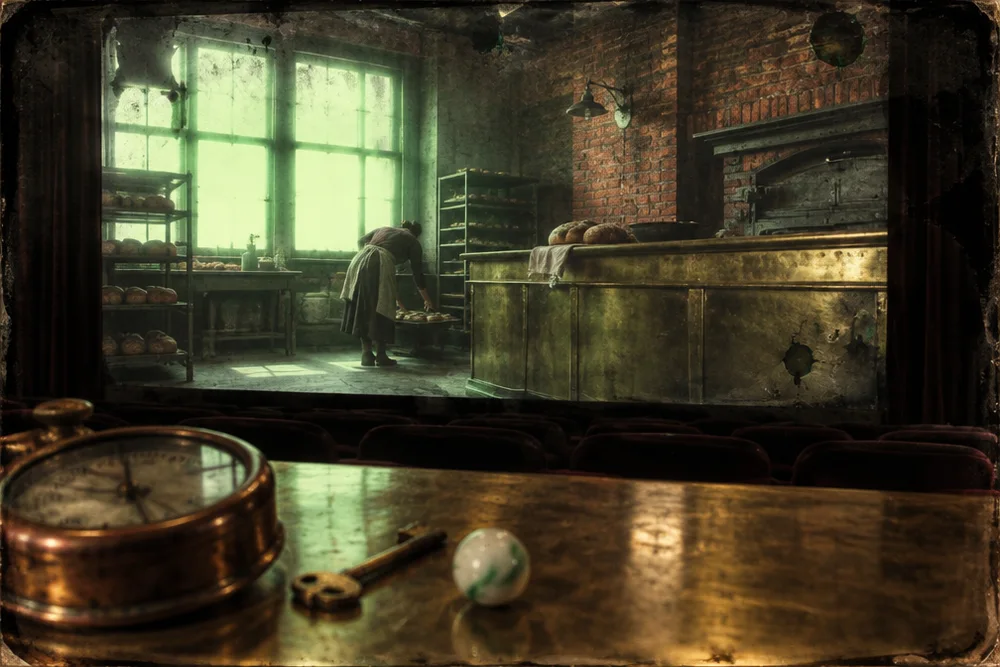
A woman in a rust apron crossed the bakery. Tressa Jory, older than the child I had carried from the flood, bent to lift a tray. Her movements had a workwoman’s certainty. The picture did not pause to show us anything. It kept living. A door swung. A shadow crossed the upstairs wall. Someone in the street raised a hand to hail another person out of frame.
Bea’s fingers tightened on the ledger. She did not ask Quilla to stop it. The film’s forward clatter settled into a steady rhythm, and the light held both floors apart.
A man came from the uphill side carrying a loaf wrapped in paper. He set it on the sill and said something to Tressa. The film had no sound, but she answered with an impatient flick of her wrist, then smiled at whatever he had said. A child darted past the window behind her, mustard-colored sleeve bright against the cream wall.
Bea leaned forward. The child vanished behind a hanging cloth before I could make out her face. Bea did not blink. “How long does this run?”
“Till the reel ends,” Quilla said. “Unless we stop it.”
“Don’t.”
The bakery clock stood over the door. Even from the auditorium I could distinguish the pale circle and its dark hands. I watched them move. The rhythm of the projector did not dictate their pace; the clock went on in its own small life, though I did not yet understand what that meant. The street was not a tableau assembled for our grief. It carried on whether we looked or not.
The film gave us a view of the landing. Orlo Venn came down the steps with his right shoulder high and his pigeon-toed gait deliberate. His green sailcloth vest hung open. He stopped by a post that was still there, and spoke to a woman whose face the bright window erased when she turned toward us. Then he went inside the building above the bakery.
I felt my fingers close around the counter. The brass pressed a neat crescent into my palm. I had spent years hearing voices near the harbor at low tide, calling for a count. I had taken them for accusation because accusation was easier to answer than a question. Here, the people were not calling at all. They had errands, bread to carry, doors to open.
Bea’s gaze followed Orlo. She kept her mouth pressed shut, as though sound might disturb the evidence.