The Soundcheck Before Monday
Page 137 of 165
Chapters
She closed the laptop. The startup routine stayed quiet; there was no cached file to summon, no hidden voices waiting in the amplifier. She switched off the board in sequence, watching each small indicator disappear. The house lights remained on, pale and even.
Before leaving, she checked the minutes from the booth doorway. The page did not say the clubs agreed. It did not say the students trusted the process. It recorded the correction, the booking-confirmation procedure, and the question about making the schedule visible. It noted that the timetable remained unresolved.
Most importantly, the question was there in the form its speaker had chosen: How will bookings be confirmed? Nothing below it repeated the words that had made Bea lift the card. Nothing suggested that Bea had approved the original phrasing by staying in the room.
Rhea thought of the moment the microphone went dead. For one breath, she had feared that muting it would make her the person deciding what could be heard. The rule had kept the decision from being hers alone. Bea had raised the card; the questioner had chosen to revise; the room had waited. Rhea’s hand had only carried out the pause.
That did not make the system perfect. A card could be missed. Someone might ignore it. A phone could be lifted. And a public sentence, once heard, could not be drawn back into the speaker’s mouth. They had said all of that in the rules, and it was still true.
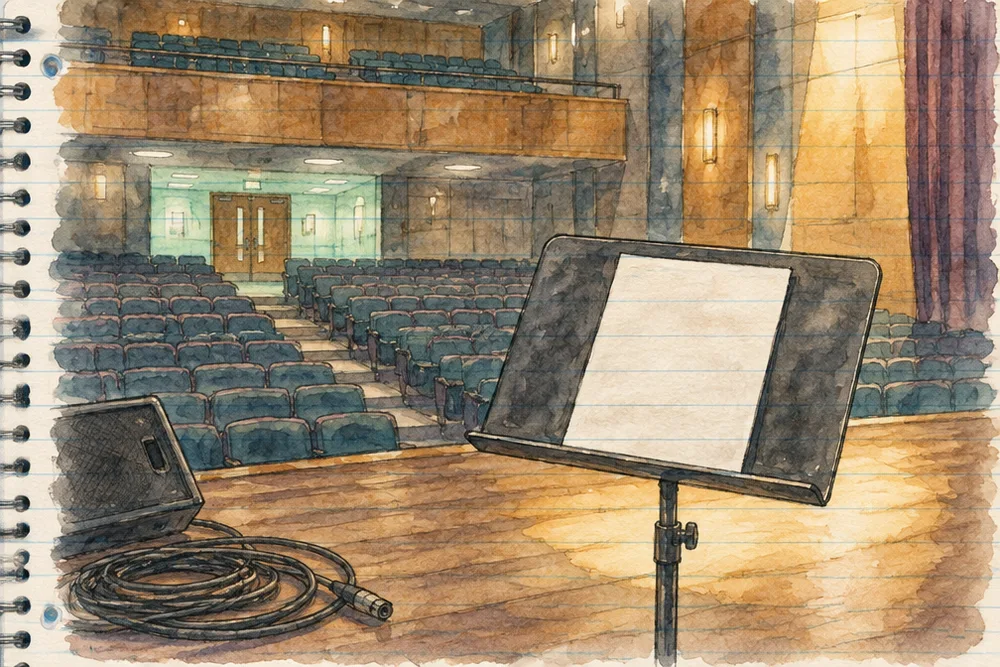
She gathered her mustard hoodie sleeves over her wrists and descended to the stage. The aisles were clear now. At the lectern, she turned the microphone off by hand, though the board was already dark. The red mute button sat cool beneath her thumb.
Outside the open doors, voices in the lobby traveled without amplification. Tomas was asking where the schedule copies would go. Mina said she could bring them to the club room herself. Saye answered that the corrected key form would be ready by the office the next morning.
No one’s voice rose above the others. No one was obliged to make a speech. The conversation continued past the auditorium doors, carrying with it a question the minutes could keep without claiming to own the people who had asked it.
Rhea left the blank sheet on the music stand. The room had not agreed on who deserved the stage. It had done something smaller and more useful: it had stopped the wrong question from becoming the only one anyone could hear.