The Noon Fold of Gannet District
Page 203 of 216
Chapters
Avel stopped at the landing to listen. The bell had gone quiet. In its place came the sounds of the people above: shouted counts, the scrape of a bench being moved, a child calling to someone out of sight and receiving an answer. No panic. No clear view of the basin, either. The walls kept shifting, and the narrow sky had become a wedge.
“Stay behind the chalk arrows,” she called to the passage crew. “If the route changes, mark it before you use it.”
An answer came from above, clipped by the doorway. Avel picked up the meter and continued. Its pulse reached her palm through the casing, small and regular. She did not mistake the steadiness for safety.
They climbed carefully. At each landing Avel stopped to compare the address plates, using the lettering rather than the apparent distance between them. The curb outside the school had become a raised lip; what had been a single step at entry was now a sloped climb, its far end aligned with the wall of the old school on the inner face. She kept one hand on the stone and one on the meter.
At the upper doorway Tern came behind them, breathing hard. Mera waited on the threshold. The school corridor was empty except for the stacked benches and a pair of bowls left on a sill. The bowls held clean water from the shelter reserve. They had not been needed for the operation, and they would be needed again tomorrow.
“The children are at the uphill rooms,” Mera said. “All names checked.”
Avel nodded. She could see no one from here, only the green-shadowed passage and the open doors along it. Beyond, an address plate hung crooked on the old school’s outer wall. Bell Court. Its twin faced the waterfront in Outer Gannet, where the new tower foundations made a precise grid on the plans and an uncertain dark shape in the living ground.
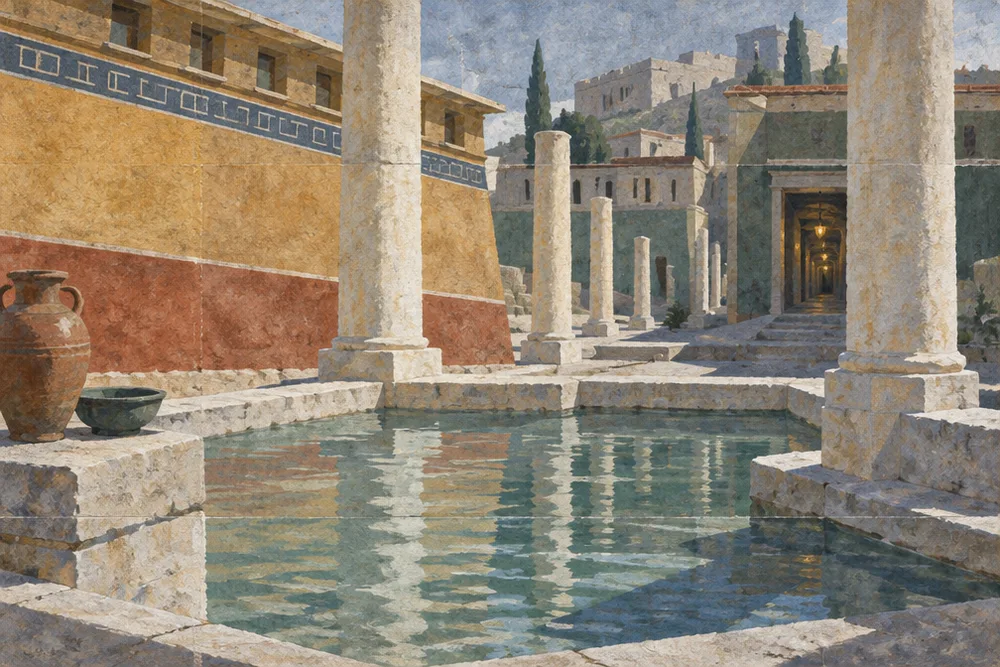
The first flood of the basin appeared as a broad, glimmering surface beyond the low roofs. It did not look like a reservoir yet. It looked like the sea had found a way inland and was pausing to consider the street. Water flowed around the concrete foundation posts, climbed their pale faces, and swallowed the chalk lines marking the first tower footprint.
Avel checked the meter. The needle held its new position. The pulses remained regular, not identical in size but close enough to count. She had wanted a reading that would prove the cities could remain attached. Instead she had a reading that said the pressure had stopped worsening. The distinction was small in the instrument and enormous everywhere else.