The Noon Fold of Gannet District
Page 147 of 216
Chapters
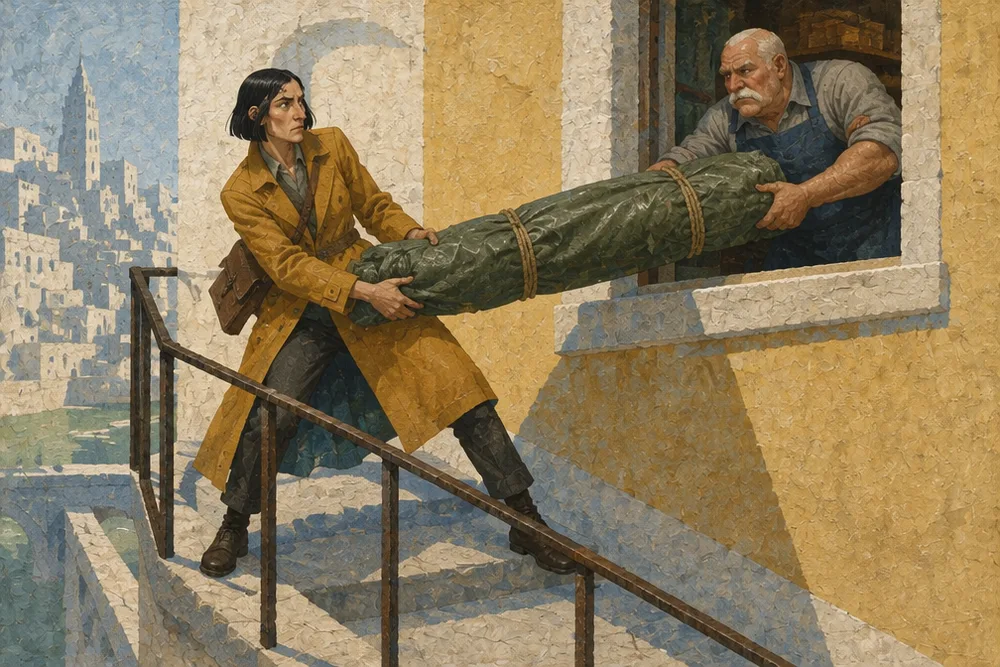
On the inner face, a figure appeared in a window: a clerk in a pale shirt, looking down toward the strange wedge of stone. Avel raised one hand and the oilcloth packet in the other. The clerk leaned out, vanished from sight, and returned with a length of cord. It dropped to the landing, just short of her reach.
Avel stretched for it. The wall shifted under her left foot. She pulled back before her balance went with it. She could not risk falling into the gap with the order and the witness roll; nor could she pretend that the route was safe because the plan labeled it a passage.
The clerk reappeared. This time another hand followed, gripping the cord’s end. Avel managed to catch it. She tied the oilcloth packet to the line and tested the knot twice. The clerk hauled the packet toward the window, inch by inch, with the cord scraping the stone. When it disappeared inside, Avel let out the breath she had been holding.
The packet was out of her hands. She was still on the landing, cut off from both doors as the city’s faces shifted around her. On the other side of the window, the orders were traveling toward Nemi’s chamber. The hearing would receive them, if the fold allowed it. Avel laid the measuring case beside her and sat down against the wall to wait for the next safe opening.
She could see the Inner Gannet chamber through the window now, though its room seemed to tilt away from her. The clerk had placed the packet on a bench beside the door and was calling someone from within. Avel tried to make out the words but heard only fragments. The cord swung loose below the sill, twitching each time the stone moved.
The fold’s eleven minutes had never felt long to her. She had measured them by watching the waterline, by taking a reading before and after, by waiting for the warning bell to end. This time each minute had a physical cost. The landing pressed against her back; the measuring rule pressed into her palm; the unfinished route below seemed to lengthen whenever she checked it. She had wanted a stable measure, something the councils could not dispute. Instead, the city was showing her that every measured crossing still depended on the people willing to use it.