The Moon in the Fitted Sheet
Page 4 of 303
Chapters
A cloud band drifted away. Sunlight—real sunlight, yellow and clear—crossed the fabric. It illuminated a grove in the center of the globe, then a pale strip that might have been water. The light did not brighten the apartment. It seemed to pass through the seam and remain on the distant ground. Elva could see the moon’s features, but no beam fell on her hand.
She shifted her grip. The seam moved under her fingertips, a thin line that vibrated like a string. On the globe, the road turned sharply by a cluster of buildings. A fleck moved along it. Then another. They were too small to be people, she told herself, and immediately saw the first one stop.
The specks had gathered in a field near the road. At that distance they were little more than marks against the amber-brown earth. One stood apart from the others, perhaps on a low wall. Another lifted both arms. The gesture passed from one person to the next. Heads turned upward, faces angled toward the sky.
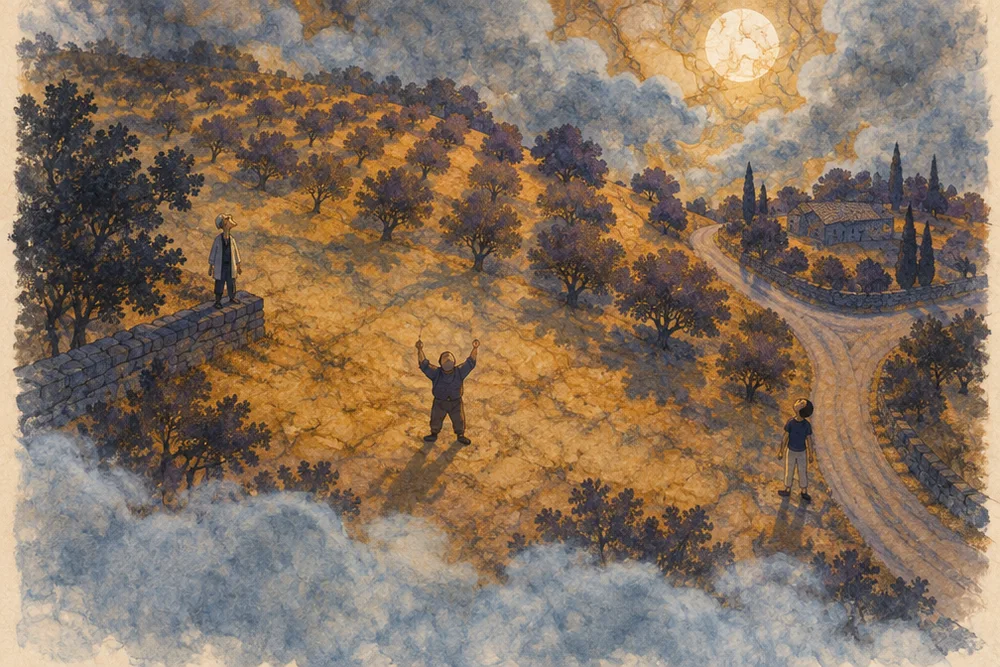
Elva leaned closer. The people were looking up at her. She could not distinguish their features, could not know whether they were frightened or merely curious. She could see only the pale flashes of faces between tree shadows, and the lifted line of their shoulders. The realization did not arrive as a thought so much as a pressure behind her ribs. She was not looking at a picture. Someone was looking back.
The moon rolled a fraction beneath the fabric. The orchard workers turned with it, still looking up. Elva tightened her grip. “I’m sorry,” she whispered, though she had no idea what she was apologizing for. Her hands trembled against the seam. The blue-gray cloth remained cool. Under it, the world continued: cloud sliding, leaves moving in a wind she could not feel, people waiting beneath a sky that had opened where the ceiling ought to be.
Elva pulled the sheet toward the head of the bed, inch by inch, until the moon stopped rolling. The movement made the people below sway across the field of her vision. The amber lines in the weave shifted, connecting orchard rows to roads, roads to the little cluster of roofs. A faint crease ran through the globe. She thought of a fold in paper, and of the way a folded thing could hide more than it showed.