The Moon in the Fitted Sheet
Page 12 of 303
Chapters
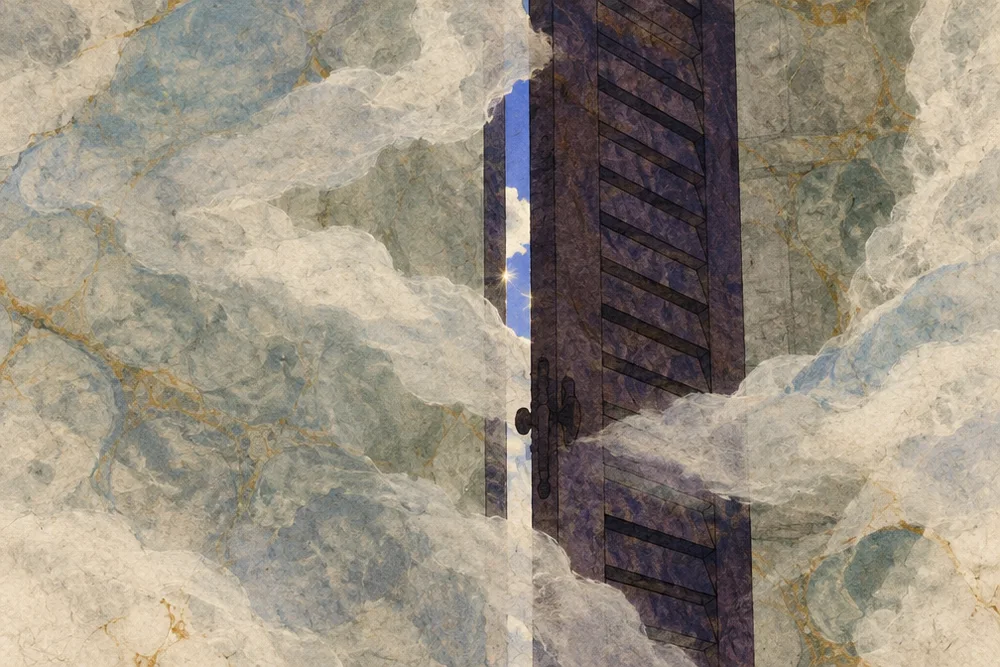
She pulled the lamp away from the moon. The shape disappeared in the cloud glare. She turned the beam back, trying to find the same angle. The sheet’s raised corner shadowed the sphere and made the light break into soft strips. Elva shifted a pillow. The moon’s clouded surface slid in and out of view, a world glimpsed through a door that did not stay in one place. She remembered how Hesta described working outside a station hull: never trust what looks fixed until you have checked the tether. Elva had never asked what happened if the tether was a bedsheet.
She steadied the lamp against the headboard and held her breath. Three flashes. Pause. One. This time the answer came quickly enough that she knew it was not a trick of her own eyes. The little shutter opened. Three blue glints crossed the cloudy gap—not bright enough to be stars, too regular to be lightning. Cloud hid the shutter before she could see whether there was a fourth. Elva’s mouth went dry. She had sent the signal into the miniature world, and something there had replied.
The memory of Iona’s old signal came with a detail she had forgotten: the story ended with Hesta running down the orchard road after the storm, lantern in hand, because she thought her sister needed help. The door had been open, and Iona had been safe on the shed roof. The family had laughed about it afterward. Elva tried to picture Hesta as a girl, rushing through mud with that blue lantern. She could not. Her mother’s face belonged to now, to the narrow ribs of her compression suit and the weary voice in her messages from low gravity.
The shutter appeared again, barely visible against a lighter seam in the clouds. The person behind it—if someone stood there—must have been watching the night. Elva gripped the lamp and gave the three flashes a third time. She almost added the one at the end, then stopped herself. The old pattern was not a conversation. It was a call made across distance, and she had no idea what the extra mark meant on the other side.
She could not tell whether the answer had come from the same shutter or another. The sphere had turned, or the clouds had changed, or her eyes had learned to find a shape where before they saw only blur. Either way, she now had a fact she could not fold away: someone on the moon had answered the lamp. Someone might be Iona. Someone might have been trying to answer for years, through whatever seam held this impossible place against the station’s ordinary life.