The Monday Without a Duck
Page 175 of 215
Chapters
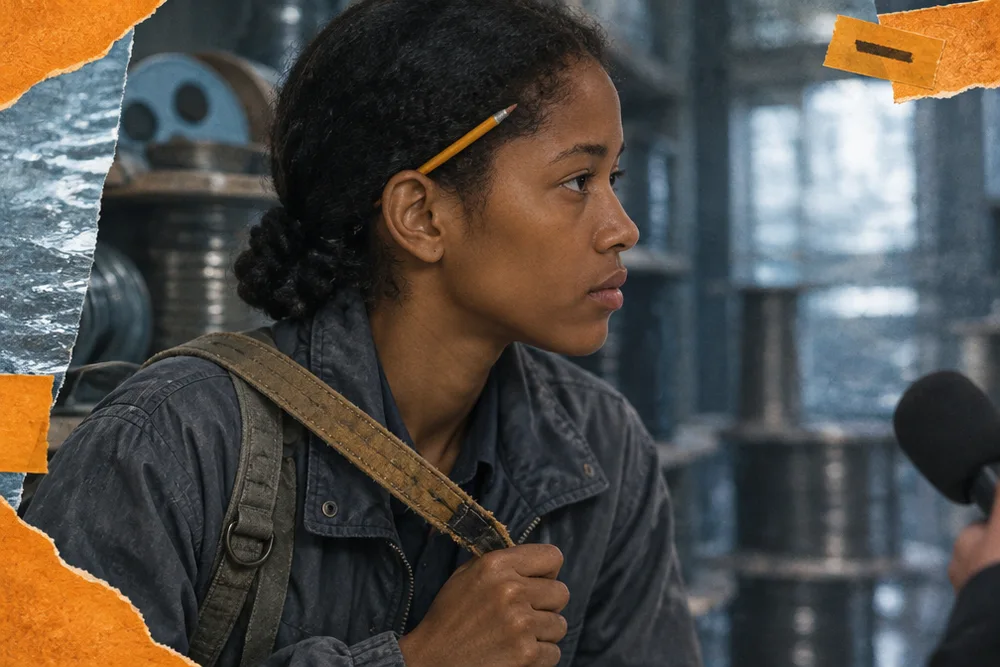
On Thursday, she took the bus from school with the rota folded in her coat pocket and her camera bag empty except for the repaired strap and a pencil. She had returned the loan gear. The strap was there because it had become the thing her hand looked for when she was nervous, and because she still carried the bag most days even when it held nothing worth protecting.
Spool Room’s door was above the shuttered haberdasher, on a narrow flight of steps that smelled faintly of dust and wet wool. A paper sign had been fixed at eye level: INTERVIEWS—PLEASE KNOCK. Kira checked the time on her phone. Three twenty-six. She wiped her palm on her windbreaker, then knocked twice.
A person inside said, “Come in.”
The room held a worktable, two mismatched chairs and a monitor on a shelf. A woman with short curls and a man in a green sweater stood beside the table. The woman introduced herself as Jo, the placement supervisor. The man gave his name as Cal and said he coordinated the youth workshops. Neither of them asked her to prove she had arrived on time.
“Would you like water?” Jo asked.
“No, thank you.” Kira sat in the chair nearest the door, then shifted it a little so she could see both interviewers without twisting. The room’s monitor was dark, its black screen reflecting a pale rectangle of window. She noticed where she would put a camera if she were filming the room, and made herself stop planning the shot.
Jo began with the application. “You submitted a short film at the deadline. We’ve both watched it. What did you want the film to do?”
Kira had prepared an answer about the town’s rhythms. She had written it down at home, then crossed out the sentence that claimed the duck made the town keep time. She could still see the crossed-out line in the pressure marks on the paper.
“At first I wanted it to prove that the town had a clockwork rhythm,” she said. “I had four years of sightings, and I treated the record as if it explained what I was filming. The missing pass made that harder to defend. I had to decide whether the film was about the duck or about the person watching for it.”
“And what’s your answer now?” Cal asked.
“I don’t think the film can tell you why the duck went past. It can show that I expected it to. Then it can show what I did when it didn’t.”