The Monday Without a Duck
Page 144 of 215
Chapters
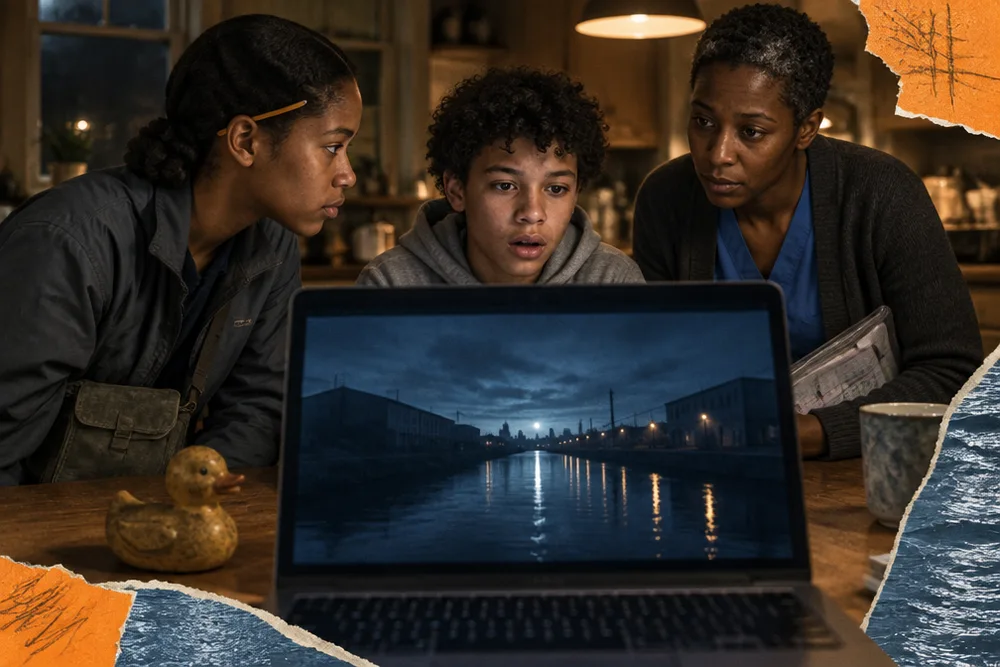
Ollie stopped rocking. He watched the last sequence with his mouth open a little, then looked at Kira. “It sounds like the room’s broken.”
“It isn’t broken,” Kira said. She paused the playback and slid the cursor back. The final sequence had been quiet at the rough-cut screening. Ruan had recorded room tone after the last wash at Turnglass, the machines settling and the lights humming. Kira had placed it beneath the end shot. Or thought she had.
She played it again. The pencil tapped, and then there was almost nothing. The export had dropped the room tone. At first she suspected the speakers, then the laptop, then the file itself. She opened the timeline. The audio track sat below the final image, a thin green strip with a little speaker icon crossed through.
“You muted it,” Leonie said, leaning over the back of the chair.
“I didn’t.” Kira checked the track controls. The icon was gray. She must have toggled it while trimming the transition, then left it that way. The room tone was still in the project, but the export had obeyed the mute.
“Can you put it back?” Ollie asked.
Kira glanced at the clock. “Yes.” The answer came out more firmly than she felt. The portal deadline was midnight. The clock on the microwave said eleven-oh-six. A correction was possible. A new version of the whole film was not.
Leonie tapped the folded rota against her palm. “Then do the correction. Don’t improve twelve other things while you’re there.”
Kira opened the editing project. The timeline arrived with its familiar stacks of images and sounds: the first window shot, the squared notebook, the pencil tap, the return to the window. One little mute symbol had made the final seconds feel like a door shutting. She clicked it. The icon brightened.
The sound file Ruan had recorded was named room_after_close. Kira didn’t rename it. She moved the playhead to the last sequence and listened through headphones. The hum came in low, not dramatic, not a machine singing to the camera. A distant drum turned; somewhere a pipe ticked. The room remained itself after the people left it.
Her finger hovered over the controls. She could raise the volume, smooth the noise, shave a fraction of a second from the pencil taps. She could make the ending more elegant. The film had been rejected by no one yet; there was no reason to fix anything beyond the missing track. But the temptation to polish rose in her hands as a restless, familiar heat.