The Monday Without a Duck
Page 134 of 215
Chapters
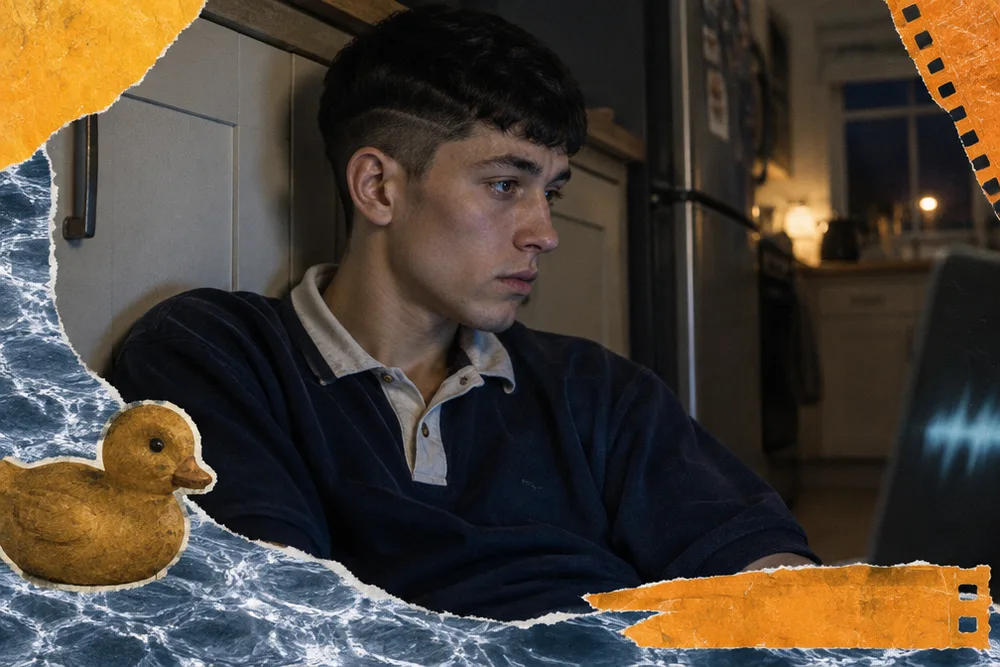
“That’s not what you said.”
Kira stopped the recording. On playback, her voice sounded like a presenter introducing a mystery, each word rounded and deliberate. It made the duck seem like a clue. “Fine. Next.”
She tried the humbler one. “For years, I’ve watched a duck pass the laundromat window at four on Mondays. I wanted to find out why it was always there.” She sat back at the table and pressed play.
Ruan’s eyebrows drew together. “That still says you wanted to find out why.”
“I did want to.”
“You wanted to film it.” He glanced at the camera bag on the floor, its strap repaired with silver tape. “You wanted the shot. You didn’t know why.”
Kira felt her ears warm. “You could say that about every film. You don’t know what you don’t know until you start.”
“Then don’t make the film pretend it knew before.”
She leaned toward the laptop, though the screen had gone black. The second line was gentler, less grand, and still bent the truth toward a tidy explanation. She had thought the film was about a clockwork town because the footage looked like one. It had been a useful idea: the repeated window, the dates, the expectation of a last pass. Useful was not the same as accurate.
Leonie clicked the kettle off without boiling it. “You two need tea or quiet?”
“Quiet,” Kira said, and then, seeing Leonie’s raised eyebrow, amended it. “Please.”
Ruan shifted his heel against the cupboard. “Third one?”
Kira crossed out the second line. The graphite tore the paper slightly. “Third one.”
For the third take, she did not stand up. She kept the laptop open and spoke toward its built-in microphone, hands flat on the table. “I kept a log of something I didn’t understand. Then I made a film that sounded as if I did.”
Ruan did not interrupt. Kira heard the fridge motor click on behind her, then the whisper of a car passing outside. She stopped recording and played it back.
The sentence had the right sort of honesty, she thought. It also sounded as if she had found the answer. Her voice had gone soft at the end, inviting the viewer to admire her for admitting a mistake. The camera gave her plenty of ways to arrange even a confession.
“It’s still telling people what to think,” Ruan said.
“It’s one sentence.”
“It says you learned a lesson.”
“I did.”
“Did you?” He looked at the timeline. “Or did you just find another way to finish it?”